Table of Contents
Key takeaways
- The best reputation management software for 2026 includes Hootsuite, Birdeye, Podium, Brand24, and Reputation, each suited to different business sizes and use cases.
- Prioritize ORM tools with AI-powered sentiment analysis, multi-channel monitoring, review management, and enterprise-grade reporting.
- A strong tool should integrate with your existing tech stack and scale across brands, regions, and locations.
What is online reputation management software?
Online reputation management software monitors, tracks, and helps you respond to brand mentions, reviews, and sentiment across social media, review sites, news outlets, forums, and search results. Instead of checking each channel manually — Yelp alone hosts over 330 million reviews — the tool brings everything into one place so your team can spot risks early and act on positive feedback fast.
Reputation management software is broader than basic social media monitoring, especially now that adults under 30 trust news and social media equally. While social media monitoring focuses on what’s happening on platforms like Instagram, TikTok, and X, online reputation management also covers review sites, search engine results, news coverage, and online forums.
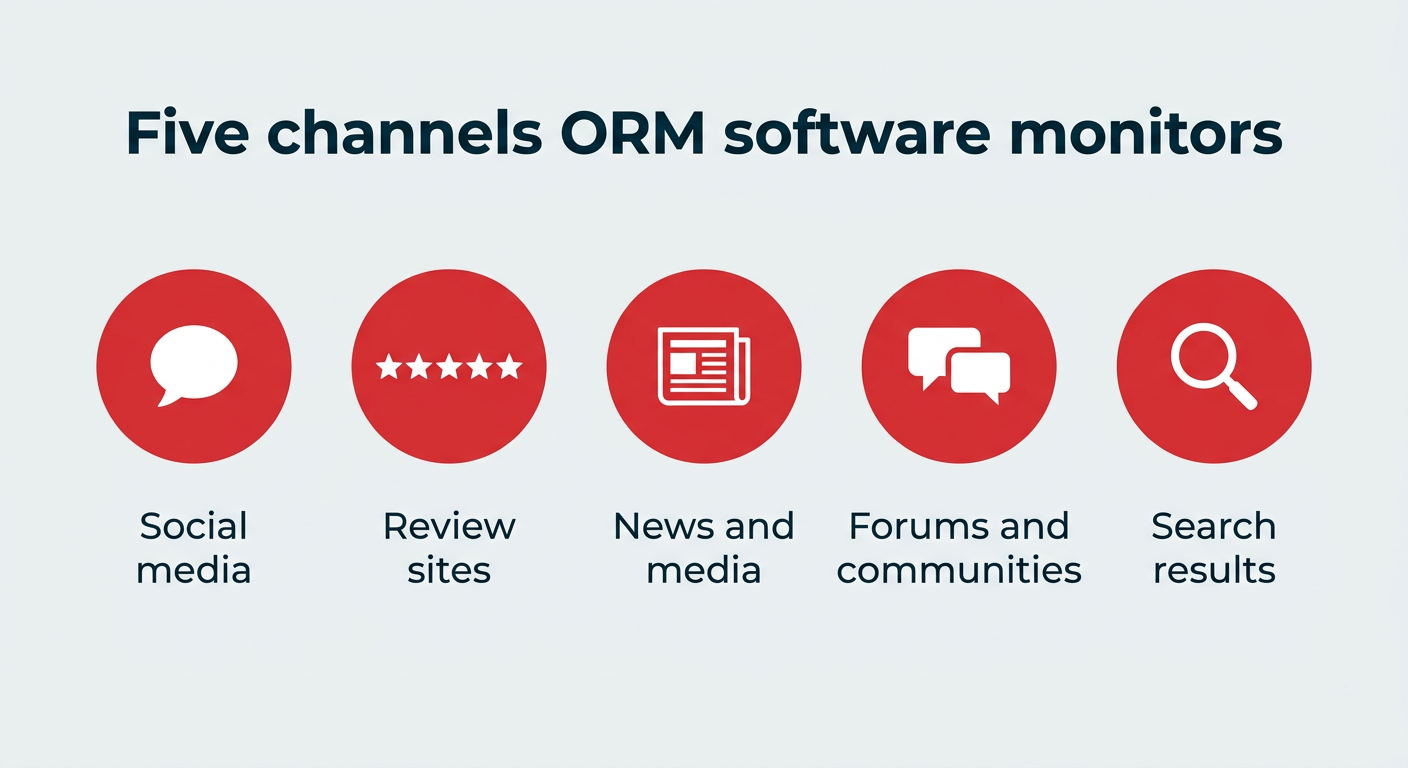
Most ORM tools monitor a mix of these channels:
- Social media: Posts, comments, and mentions across networks
- Review sites: Google, Trustpilot, Yelp, and industry-specific platforms
- News and media: Articles, press coverage, and blogs
- Forums and communities: Reddit, Quora, and niche message boards
- Search results: What shows up when someone searches your brand, a channel shifting fast as traditional search volume drops 25% in favor of AI-powered search engines
In short, an ORM tool gives you a complete picture of your brand’s online presence so you can manage it with confidence.
Bonus: Download a free guide to learn how to use social media listening to boost sales and conversions today. No tricks or boring tips—just simple, easy-to-follow instructions that really work.
What are reputation management services?
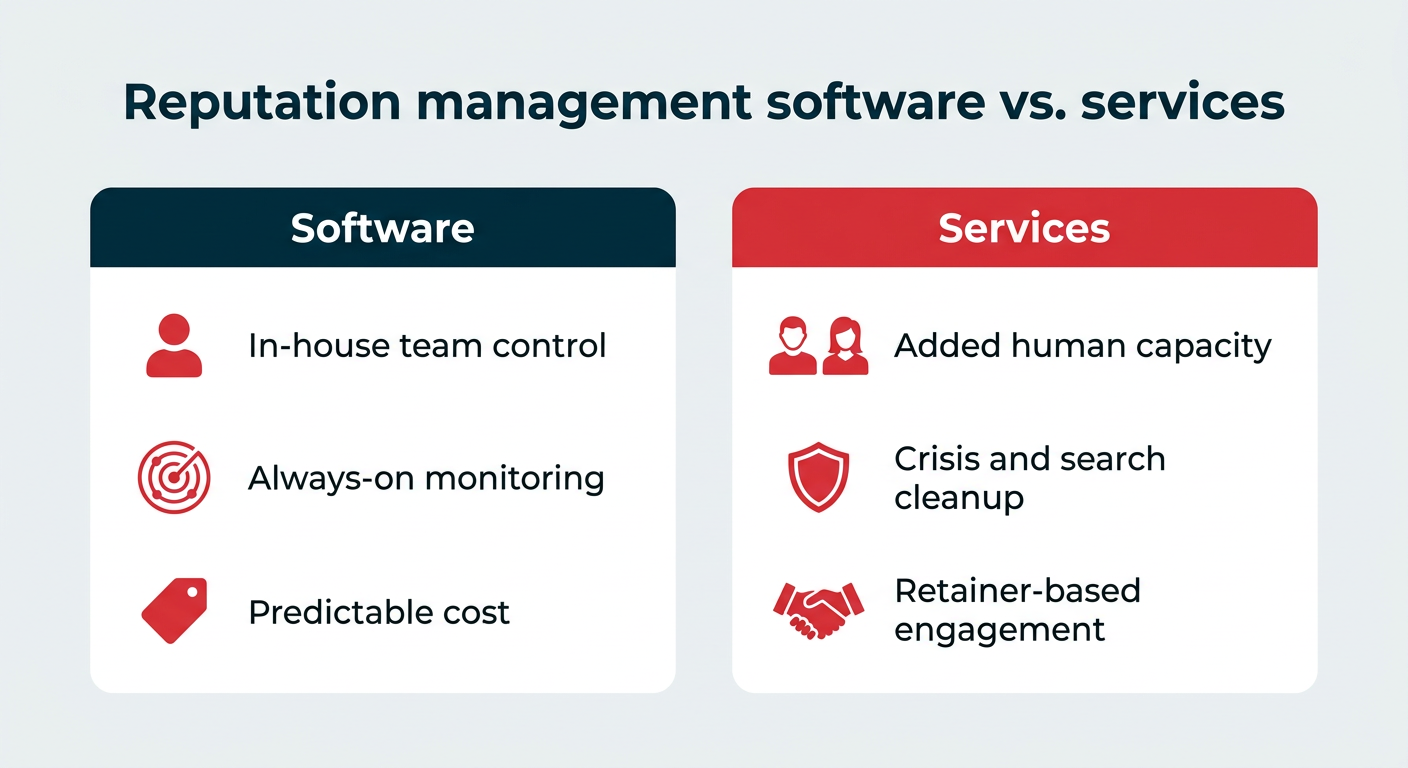
Reputation management services are agencies or consultancies that monitor, repair, and improve your brand’s online reputation for you, rather than handing you software to run yourself. They typically handle review responses, crisis communications, search result cleanup, and ongoing sentiment reporting as a retainer-based engagement.
The practical difference is ownership. Software gives your in-house team the dashboards, alerts, and workflows to act directly, usually at a predictable per-user or per-location cost. Services add human capacity, which can help if you don’t have a social or PR team, or if you’re dealing with a specific issue like negative search results or a legal dispute.
Many organizations use both: software as the always-on monitoring layer, and an agency for specialist work. If you have a team in place and want day-to-day control, software is usually the better starting point.
Why should you invest in reputation management software?
Reputation management tools let you listen closely to online conversations, track keywords and mentions, and keep an eye on industry news that might impact your business. Once you’ve got your finger on the pulse, you can measure, manage, and optimize brand sentiment, helping the world see you for the trustworthy, authentic business that you are.
Trusted brands are successful brands. The 2025 Edelman Trust Barometer found that trust has become a critical factor for brands. For brands, that makes building and maintaining brand reputation a business priority, not a communications afterthought.
Edelman’s 2025 special report also found trust is as much of a purchase consideration as quality and price. When that trust erodes, the cost shows up in customer churn, lost revenue, and the time and money spent on damage control.

You can’t address dissatisfied customers or correct misinformation if you don’t hear about it first, and an unanswered complaint can escalate quickly into a public PR crisis.
You also can’t amplify your supporters and advocates if you’re not aware of their praise. The right tools help you stay ahead of risk and turn brand reputation management into a competitive advantage.
How we evaluated these tools
We looked at the reputation management software most commonly shortlisted by mid-market and enterprise marketing teams, then compared each platform on the criteria that tend to decide a purchase. The goal was practical: which tools cover the channels you need, help you act, and scale as you grow.
Here’s what we weighed for every tool on this list:
- Monitoring breadth: How many channel types the tool covers, including social, reviews, news, forums, and search
- AI capabilities: Sentiment analysis, anomaly detection, trend surfacing, and response assistance
- Review management: Whether you can collect, monitor, and reply to reviews in one place
- Response workflows: Routing, approvals, saved replies, and team collaboration
- Integrations: Connections to CRM, helpdesk, and business intelligence systems
- Scalability: Support for multiple brands, regions, or locations
- Pricing transparency: Whether published pricing is available or quote-only
- User feedback: Recurring themes in public reviews on sites like G2 and Capterra
No single tool wins on every criterion, which is why the shortlist below is organized by use case rather than ranked top to bottom.
How do you choose the right reputation management software?
Choosing the right reputation management software comes down to matching the platform to your organization’s needs, scale, and goals. Before you commit, it helps to get clear on what you actually need to monitor and how you plan to act on what you find.
A simple way to frame the decision: list the channels where your customers already talk about you, then rule out any tool that can’t cover the top three. From there, filter by whether you need to respond inside the tool or only monitor, and finally by budget and reporting needs. That order keeps you from paying for depth you won’t use.
Start by working through this checklist:
- Channels: Which platforms do you need to monitor (social media, reviews, news, forums, search)?
- Scale: How many brands, locations, or regions are you managing?
- Team size: How many people need access, and do you need approval workflows?
- Budget: What can you realistically spend per month or per user?
- Action: Do you need to respond to reviews and messages, or just monitor?
- Reporting: Who needs to see results, and how detailed do reports need to be?
Answering these questions up front makes it far easier to narrow a long list of tools down to a shortlist that actually fits.
What key features should you look for?
The key features you should look for include multi-channel monitoring, AI-powered sentiment analysis, review management, competitive benchmarking, real-time alerts, and customizable reporting. These capabilities help you monitor more channels, understand sentiment, and respond faster.
Prioritize these features when comparing tools:
- Multi-channel monitoring: Track mentions across social media, reviews, news, and forums
- AI-powered sentiment analysis: Understand how people feel about your brand at scale
- Review management: Collect, monitor, and respond to reviews in one place
- Competitive benchmarking: Compare your brand health against competitors
- Reporting and analytics: Turn data into insights leadership can act on
- Real-time alerts: Get notified the moment sentiment shifts or a crisis emerges
A tool that covers these bases gives you both the visibility and the speed you need to protect your brand.
How important are integrations and scalability?
Integrations and scalability are critical for enterprise teams, because a reputation tool is only as useful as the workflows it fits into.

Look for software that connects to your existing tech stack, including your CRM, business intelligence tools, and helpdesk, so insights flow where your team already works.
Scalability matters just as much. If you manage multiple brands or regions, you’ll want multi-brand support, team collaboration features, and approval workflows that keep everyone aligned. Hootsuite Social OS offers 100+ integrations plus MCP connectors, along with support for employee advocacy, which makes it a strong fit for teams that need reputation management to scale with the business.
Is review gating legal?
Review gating is the practice of screening customers before asking for a public review, so only those who report a positive experience are invited to leave one. It is not universally illegal, but the US Federal Trade Commission treats it as a deceptive practice under its rule on consumer reviews and testimonials, because it misrepresents the overall body of customer feedback.
Platform policies matter too. Google’s prohibited and restricted content policy bars soliciting reviews selectively based on expected sentiment, and other review sites apply similar rules. Violations can mean removed reviews, suppressed listings, or enforcement action.
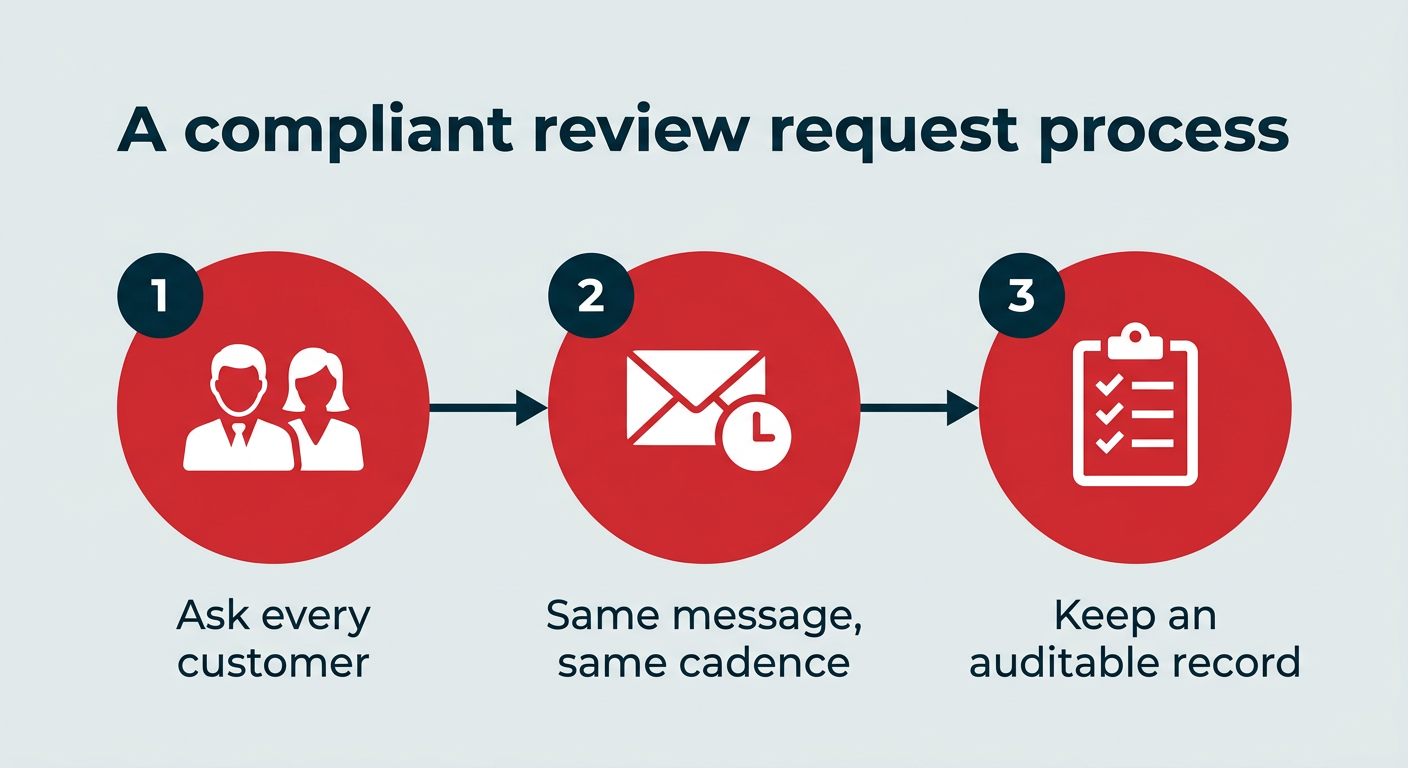
For marketing teams, the safe approach is to request reviews from every customer in a segment, on the same cadence, with the same message. Reputation management software helps here by automating review requests across your full customer list and keeping an auditable record of who was asked and when.
What are the 12 best reputation management software tools for 2026?
Online reputation monitoring tools are a social media manager’s best friend. These are programs that help you catch flattering posts and positive customer experiences that you can re-share with the world, and stop not-so-nice commentary before it spreads too far. Several double as review management software, with built-in collection and response workflows.
Here’s how the 12 best options compare.
Tool | Best for | Key strength | Starting price | AI capabilities | Free trial or plan |
|---|---|---|---|---|---|
Hootsuite | Enterprise social media and reputation management | Social listening + unified customer care | $99/user/month (billed annually) | Yes | Free trial |
Birdeye | Multi-location and review-heavy industries | Review and listings management | Custom | Yes | Demo only |
Podium | Local and multi-location businesses | Text-based review collection | Custom | Yes | Free trial |
Brand24 | Real-time mention tracking | Social mention monitoring | $199/month (billed annually) | Yes | Free trial |
Trustpilot | E-commerce and service businesses | Verified consumer reviews | Free plan plus paid plans from $99/month (Enterprise is custom) | Yes | Free plan |
Yext | Enterprise listings and reviews | Digital presence management | Custom | Yes | Demo only |
Meltwater | PR and media intelligence | Media monitoring + PR analytics | Custom | Yes | Demo only |
Semrush | SEO + reputation in one platform | Brand and competitor monitoring | $139.95/month | Yes | Free trial |
Brandwatch | Enterprise consumer intelligence | Deep social listening | Custom | Yes | Demo only |
Google Alerts | Basic, free web monitoring | Free mention alerts | Free | No | Free |
Reputation | Multi-location enterprises | Customer experience management | Custom | Yes | Demo only |
SOCi | Franchise and multi-location brands | Localized reputation at scale | Custom | Yes | Demo only |
1. Hootsuite
Hootsuite is an enterprise social media management platform with built-in online reputation management capabilities. Beyond scheduling content across all of your social channels, Hootsuite Social OS brings monitoring, customer care, and brand reputation management into one connected system.
Every Hootsuite plan includes everything you need to get started with social listening. Beginners can use Quick Search to discover trending hashtags, brands, and events anywhere in the world, or dive deeper for personalized insights on your brand.
Hootsuite Quick Search surfaces trending topics and brand mentions across social channels.
For deeper insights, Lumen, the integrated insights and listening app inside Hootsuite Social OS, lets you see what people are saying about your brand, industry, and competitors. It draws on more than 150 million sources across 187 languages, making it one of the most comprehensive social listening tools available. You can set alerts for changes to brand sentiment so you can react quickly and mitigate risk, and keep an eye on how products and campaigns are performing.

Lumen tracks sentiment trends over time to help you spot shifts in brand perception.
Wisdom, the AI orchestration layer in Social OS, adds contextual intelligence on top of that data. It cuts through the noise to surface emerging trends and flag conversations your team might otherwise miss, so reputation insights arrive with recommended next steps rather than as raw volume charts.

Then there’s Nest, the customer care app in Social OS, which streamlines monitoring and answering DMs, comments, public posts, and mentions so your team never accidentally leaves an important message on read. It bridges the gap between brand monitoring, social media engagement, and customer service, and manages all of your social messages in one place. This includes:

Nest consolidates messages, comments, and mentions from all social channels in one unified view.
- Private messages and DMs
- Public messages and posts on your profiles
- Dark and organic comments
- Mentions
- Emoji reactions
- … and more.
Nest also comes with handy automations:
- Automated message routing: Send messages to the right team member
- Auto-responses and saved replies: Answer common questions instantly
- Customer satisfaction surveys: Automatically triggered after interactions
- AI-powered chatbot features: Handle routine queries at scale
For regulated teams, Vigil handles governance across Social OS, with approval workflows, permissions, and audit trails so responses stay consistent and on-policy at scale.
Standout feature: Lumen’s listening coverage across 150 million-plus sources and 187 languages, connected directly to the same workspace where your team replies.
Pros:
- Monitoring, publishing, and customer care live in one connected system, so you can act on a mention without switching tools
- AI-powered sentiment analysis and trend detection via Lumen and Wisdom
- Governed workflows through Vigil suit multi-team and multi-region organizations
Limitations:
- Full listening and advanced care features sit on the Enterprise plan, which uses custom pricing
- Review site coverage is narrower than dedicated review platforms like Birdeye or Reputation
Key features: Social listening, sentiment analysis, unified customer care inbox, auto-routing, AI chatbot, competitor benchmarking, 100+ integrations
Pricing: Standard from $99/user/month; Advanced from $249/user/month; Enterprise custom pricing (Lumen listening and advanced care features are available on the Enterprise plan)
Best for: Enterprise teams that want social media management and reputation monitoring in one platform.
Meet the Suite
Understand what matters, decide what to do next, and take action across every social workflow — all from one connected suite.

2. Birdeye
Birdeye is a customer experience and reputation platform built for businesses that live and die by their reviews. It helps you collect, monitor, and respond to reviews across hundreds of sites while keeping your business listings accurate, and it rolls survey and messaging data into the same location-level view.

Source: Birdeye
Standout feature: Automated review requests paired with listings sync across hundreds of directories.
Pros:
- Broad review site coverage with AI-assisted response drafting
- Strong location-level reporting for franchises and multi-site brands
- Combines reviews, surveys, and messaging in one platform
Limitations:
- Quote-only pricing makes budgeting harder for smaller teams
- Social publishing and listening are lighter than dedicated social platforms
Key features: Review management, listings management, surveys, AI-powered insights, messaging
Pricing: Custom pricing based on locations and features
Best for: Multi-location businesses and review-heavy industries like healthcare, retail, and home services.
3. Podium
Podium focuses on collecting reviews and managing customer interactions through text messaging, which makes it especially popular with local businesses. It helps you generate Google reviews, respond quickly, and even collect payments in the same conversation.

Source: Podium
Standout feature: SMS-first review requests, which typically see higher response rates than email.
Pros:
- Fast setup and a simple interface for non-technical teams
- Review requests, messaging, and payments in one thread
- AI response tools speed up replies to routine reviews
Limitations:
- Built around local operations, so enterprise reporting is limited
- Little coverage of news, forums, or broader web mentions
Key features: Text-based review collection, payment integration, messaging, AI response tools
Pricing: Custom pricing by plan
Best for: Local and multi-location businesses that rely heavily on Google reviews.
4. Brand24
Brand24 is a real-time monitoring tool that tracks brand mentions across social media, news, blogs, forums, and review sites. It’s a strong choice for teams that want to catch conversations as they happen and measure sentiment at a glance.

Source: Brand24
Standout feature: Anomaly alerts that flag unusual spikes in mention volume before they become a crisis.
Pros:
- Published pricing and quick setup compared with enterprise listening suites
- Clear sentiment and reach metrics for reporting to leadership
- Identifies the accounts driving conversation about your brand
Limitations:
- Monitoring only, with no built-in publishing or review collection
- Mention limits on lower tiers can be restrictive for high-volume brands
Key features: Real-time mention tracking, sentiment analysis, influencer identification, reach metrics
Pricing: From $199/month (billed annually); $249/month on month-to-month billing
Best for: Real-time brand monitoring and social mention tracking.
5. Trustpilot
Trustpilot is a review platform designed to instill confidence in consumers, operating with transparency and integrity. It helps businesses collect verified reviews, display trust signals through widgets and ratings, and turn authentic customer experiences into a reputation asset.
With the Trustpilot Hootsuite integration, you can also monitor your Trustpilot reviews in real time in your Hootsuite Streams and effortlessly share customer reviews across different social networks.

Source: Trustpilot
Standout feature: Verified review badges and on-site widgets that carry recognizable trust signals for shoppers.
Pros:
- Free plan makes it accessible for smaller e-commerce brands
- Review verification reduces exposure to fake or incentivized reviews
- Integrates with Hootsuite for monitoring and resharing reviews
Limitations:
- Covers Trustpilot reviews only, not other review sites or social channels
- Negative reviews stay public and cannot be removed without a valid policy breach
Key features: Review collection, review verification, on-site widgets, consumer trust signals
Pricing: Free plan available; paid plans from $99/month (billed annually), with Enterprise custom pricing
Best for: E-commerce and service businesses building consumer trust through verified reviews.
6. Yext
Yext is a digital presence management platform that keeps your business information accurate across hundreds of directories, maps, and search engines. It also monitors and helps you respond to reviews from a single dashboard.

Source: Yext
Standout feature: Centralized control of business data across directories, maps, and AI-powered search surfaces.
Pros:
- Best-in-class listings accuracy for brands with many locations
- Review monitoring and response sit alongside listings in one dashboard
- Analytics tie local search visibility to discovery performance
Limitations:
- Priced for enterprise, which can be steep for smaller organizations
- Social listening is not a core strength
Key features: Listings management, review monitoring, AI-powered search optimization, analytics
Pricing: Custom pricing by plan
Best for: Enterprise brands managing listings and reviews across hundreds of directories.
7. Meltwater
Meltwater’s media intelligence tracking embraces the idea that businesses need to take a holistic view of their reputations. Its tools combine media monitoring, social listening, PR analytics, and influencer management to give you an accurate pulse of brand health, along with suggestions for growth.

Source: Meltwater
Meltwater’s dashboard provides comprehensive media monitoring across news outlets and social platforms.
You can also discover hidden insights and an in-depth look at your SEO profile, brand equity, and competitors.
Standout feature: Earned media coverage that spans global news, broadcast, and print alongside social data.
Pros:
- Deep news and broadcast monitoring that most social tools lack
- PR analytics connect coverage to share of voice and brand health
- Influencer discovery and management built in
Limitations:
- Breadth of features means a longer onboarding period
- Review site management is limited compared with dedicated ORM platforms
Key features: Media intelligence, social listening, PR analytics, influencer management
Pricing: Custom pricing by plan
Best for: Enterprise teams combining PR monitoring with social reputation management.
8. Semrush
With Semrush, you can track and analyze competitor accounts and manage your public brand awareness and brand reputation. While it’s primarily an SEO platform, its brand monitoring and position tracking features make it a useful reputation tool, too.
The Market Explorer feature lets users quickly check their brand’s role and classification inside the market, while other tools surface keyword and backlink gaps. That means you can also review the phrases your brand isn’t affiliated with yet and find opportunities to close them.

Source: Semrush
Standout feature: Search visibility data that shows what ranks when someone looks up your brand.
Pros:
- Published pricing and a free trial
- Connects reputation to organic search performance in one place
- Strong competitor and backlink analysis
Limitations:
- No review collection or response workflows
- Social and sentiment features are secondary to SEO tooling
Key features: Brand monitoring, competitor analysis, backlink tracking, position tracking, online visibility management
Pricing: From $139.95/month for the Classic SEO Pro plan; the newer Semrush One bundles start at $199/month for Starter, $299/month for Pro+, and $549/month for Advanced
Best for: Teams that want SEO and reputation monitoring in one platform.
9. Brandwatch
Brandwatch is an enterprise social listening and consumer intelligence platform that helps large teams understand how people feel about their brand. It analyzes millions of conversations to surface trends, track sentiment, and even recognize brand logos in images.

Source: Brandwatch
Standout feature: Image and logo recognition that catches visual brand mentions text search would miss.
Pros:
- Large historical data archive for trend and benchmark analysis
- Flexible query building for research and insights teams
- Customizable dashboards for executive reporting
Limitations:
- Query setup has a learning curve and often needs a dedicated owner
- Review site coverage is limited relative to ORM-specific tools
Key features: Social listening, consumer intelligence, image recognition, trend analysis
Pricing: Custom pricing by plan
Best for: Enterprise teams needing deep consumer intelligence and trend analysis.
10. Google Alerts
Google Alerts is a free, basic starting point for brand monitoring. Set it up with your brand name, product name, or campaign name, and you’ll receive email notifications whenever those terms appear in new web content.
You don’t need any special software or linked social media accounts to use Google Alerts, so you can even set up alerts for news about your competitors. Just keep its limits in mind: it doesn’t include sentiment analysis, social media coverage, or analytics, so it works best as a supplement rather than a standalone solution.

Source: Google
Pros:
- Completely free with no setup cost or contract
- Useful for tracking competitor news alongside your own brand
Limitations:
- No sentiment analysis, social coverage, or reporting
- Alerts can miss mentions or arrive late
Key features: Free web mention alerts, keyword tracking, email notifications
Pricing: Free
Best for: Small teams or individuals who need basic web mention alerts at no cost.
11. Reputation
Reputation is a customer experience management platform that helps large organizations monitor reviews, surveys, and feedback across every location. It benchmarks performance against competitors and breaks insights down to the location level.

Source: Reputation
Standout feature: A single score that rolls review, survey, and listing performance into one location-level benchmark.
Pros:
- Granular location reporting for large, distributed organizations
- Competitive benchmarking against local and regional rivals
- Survey and feedback data sit alongside public reviews
Limitations:
- Enterprise implementation takes time and internal resourcing
- Quote-only pricing with no self-serve entry point
Key features: Customer experience management, review monitoring, competitive benchmarking, location-level analytics
Pricing: Custom pricing by plan
Best for: Multi-location enterprises in healthcare, hospitality, and automotive.
12. SOCi
SOCi is built for franchises and multi-location brands that need to manage social media and reputation across hundreds or thousands of locations. It combines localized content, review monitoring, and automated review responses in one platform.

Source: SOCI
Standout feature: Localized content libraries that let individual locations post on-brand without central sign-off every time.
Pros:
- Built specifically for franchise governance and local autonomy
- Automated review responses reduce workload at scale
- Combines social publishing and reputation in one place
Limitations:
- Overbuilt for single-location or small brands
- Listening depth trails dedicated consumer intelligence platforms
Key features: Multi-location social and reputation management, localized content, review response automation
Pricing: Custom pricing by plan
Best for: Franchise and multi-location brands managing reputation at scale.
How do you monitor your online reputation?
You monitor your online reputation by setting up tools to track brand mentions, reviews, and sentiment across your channels, then regularly analyzing trends and responding to feedback. Here’s a simple six-step process to follow.
- Audit your current online presence
- Set up monitoring across channels
- Track and categorize mentions
- Analyze sentiment trends
- Respond and engage
- Report and optimize
Here’s what each step looks like in practice.
1. Audit your current online presence. Start by searching for your brand across social media, review sites, search engines, and forums. This baseline shows you where conversations are already happening and where your reputation currently stands.
2. Set up monitoring across channels. Use an online reputation monitoring tool to track your brand name, products, executives, and campaigns. Add competitor and industry keywords so you don’t miss the bigger picture.
3. Track and categorize mentions. Organize incoming mentions by type, such as praise, complaints, questions, or press. Categorizing helps you route each one to the right team and prioritize what needs attention first.
4. Analyze sentiment trends. Use sentiment analysis to see whether conversations are trending positive, negative, or neutral over time. Sudden shifts are early warning signs worth investigating.
5. Respond and engage. Reply to reviews, answer questions, and address complaints quickly and professionally. Fast, genuine responses can turn an unhappy customer into a loyal one and build lasting brand loyalty.
6. Report and optimize. Share regular reports on brand health and sentiment with leadership, and use what you learn to refine your customer experience strategy.

Follow these steps consistently, and you’ll catch issues early while building a stronger, more trusted brand over time.
How can you manage your brand reputation with Hootsuite Social OS?
Hootsuite Social OS handles brand reputation management as a connected system rather than a set of separate tools. Listening, customer care, insights, and governance share the same workspace, so a spike in negative sentiment and the reply that addresses it live in one place.
Lumen provides real-time listening across more than 150 million sources in 187 languages, so you see what’s being said about your brand, competitors, and category as it happens. Nest brings messages, comments, and mentions from every connected channel into one view with routing and saved replies, so responses go out fast and to the right person.
Wisdom adds AI-powered insights on top, surfacing the conversations that matter and the context behind them. Vigil keeps it all governed with permissions, approvals, and audit trails for teams that need them.
If your reputation work is currently split across a listening tool, a review platform, and a shared inbox, consolidating it is usually the fastest way to cut response times.
FAQ: Online reputation monitoring tools
What is an online reputation management tool?
What’s the best reputation management software?
What are reputation management services?
What are the tools of online reputation management?
How do you monitor your online reputation?
How much do online reputation management tools cost?
Is review gating illegal?
What are the top review sites businesses should monitor?
Can AI help with online reputation management?
What features should I look for in an ORM tool?
Save time managing your social media marketing strategy with Hootsuite. Publish and schedule posts, find relevant conversions, measure results, and more â all from one dashboard. Try it free today.