Table of Contents
Key takeaways
- Social media listening reveals what customers actually want, and acting on that feedback (instead of guessing) is what earns advocacy.
- Tracking mentions, sentiment, and competitor conversations helps you find your most loyal customers and turn them into advocates.
- A structured social listening workflow, from setup to action, separates brands that earn advocates from those that just collect data.
- Measuring advocacy through sentiment trends, mention volume, and share of voice proves ROI and builds a business case for leadership.
What is customer advocacy?
Customer advocacy is the practice of nurturing relationships with your happiest, most loyal customers with the goal of turning them into brand advocates.
This matters because consumers trust word-of-mouth over a brand’s own marketing. In fact, 34% of consumers say “a focus on self-promotion” is a major turn-off in how they perceive brands on social, according to Hootsuite’s Social Media Trends 2025 report.
By turning more consumers into advocates, you can boost brand awareness, customer satisfaction, and brand sentiment. It’s worth noting the difference between customer advocacy and brand advocacy: Customer advocacy is what your brand does to champion customer needs, while brand advocacy is what happens when those customers promote you to others.
Why does customer advocacy matter in 2026?
Customer advocacy matters in 2026 because acquiring a new customer costs far more than keeping an existing one, and loyal advocates do some of that acquisition work for free. When a happy customer recommends you, they carry more credibility than any ad you could run.
That credibility is the whole point. People trust peer recommendations over branded messaging, so advocates shorten the path from awareness to purchase. They also tend to spend more, build stronger brand loyalty, and forgive the occasional misstep.
For CMOs and VPs of Marketing, that adds up to a measurable impact on brand sentiment and revenue. Advocacy isn’t a soft metric. It’s a growth lever, and social listening (now a $10.91 billion market) is how you find it.
Social media listening, now used by 76% of marketers globally, is the practice of tracking and analyzing online conversations about your brand, competitors, and industry to uncover insights, sentiment, and trends. It goes beyond counting mentions to understanding the why behind them.
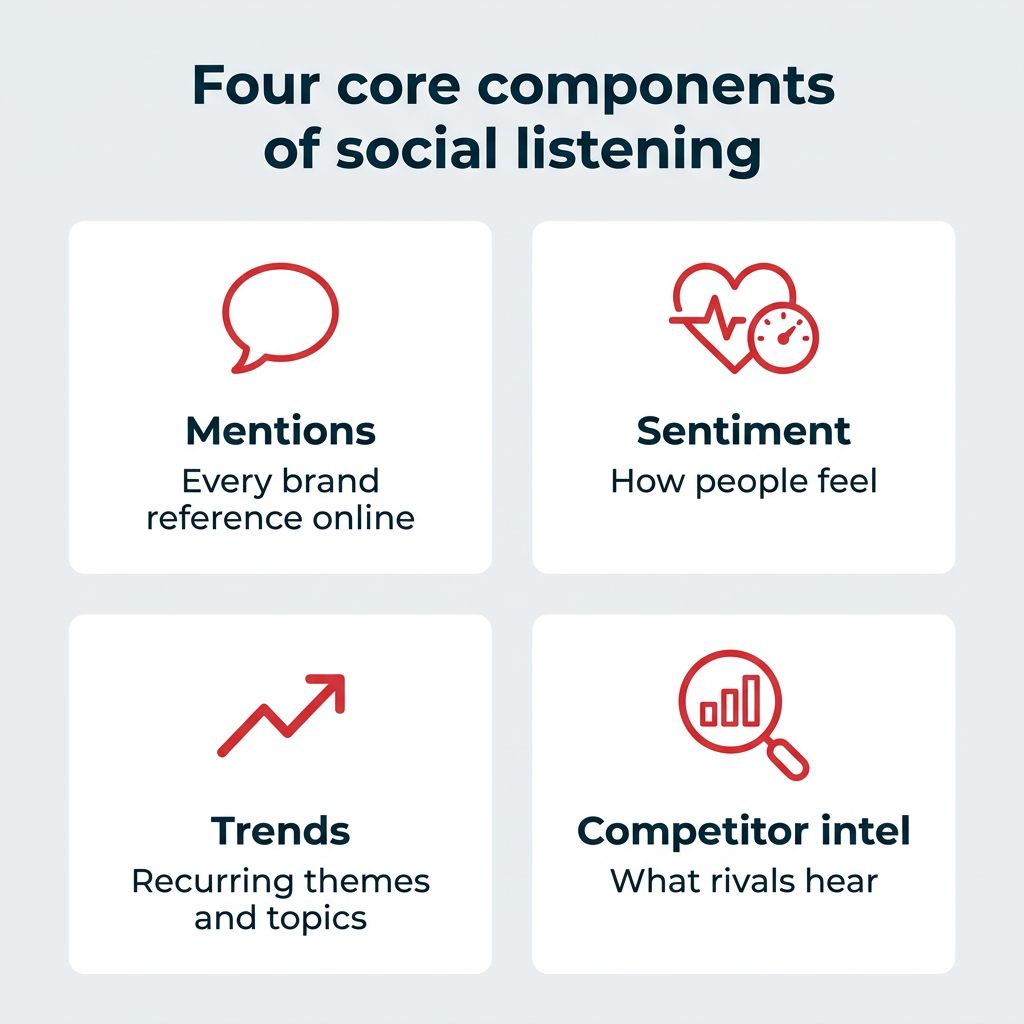
Done well, this practice helps you see the bigger picture of how people feel about your brand. Here are the key components:
- Mentions: Every time your brand, products, or campaigns come up online, whether or not you’re tagged.
- Sentiment: How people actually feel (positive, negative, or neutral) about what they’re discussing.
- Trends: Recurring themes and emerging topics across conversations in your space.
- Competitor intel: What people are saying about the brands you compete with, and where the gaps are.
What’s the difference between social listening and social monitoring?
Social monitoring tracks individual mentions and helps you respond to them, while social listening analyzes patterns, sentiment, and trends across many conversations. Both matter for advocacy, but listening is the strategic layer that tells you what’s driving loyalty in the first place.
| Social listening | Social monitoring | |
|---|---|---|
| Focus | Trends, sentiment, patterns | Individual mentions, alerts |
| Scope | Industry, competitors, audience | Your brand specifically |
| Output | Strategic insights | Tactical responses |
| Advocacy role | Identifies what drives loyalty | Catches opportunities to respond |
How does AI-powered social listening work in 2026?
AI-powered social listening works by using natural language processing (NLP) to read conversations the way a person would, rather than simply matching keywords. That means it can pick up context, sarcasm, and emotional drivers that basic keyword tools miss entirely.
In practice, that shift matters for advocacy. A post that says “well, that’s just great” is scored as frustration, not praise, so your team responds appropriately instead of celebrating a complaint. NLP models also cluster conversations into themes automatically, which is how you spot an emerging issue before it becomes a trend.
Inside Hootsuite Social OS, Lumen handles this layer of the work. It analyzes conversations across social platforms, news, blogs, forums, and review sites in dozens of languages, then surfaces sentiment, themes, and the accounts driving the most conversation. For advocacy, that context is the difference between knowing people are talking and knowing why they’re talking.
Social listening and customer advocacy work together because listening shows you what people are saying online, and acting on it turns positive experiences into real recommendations.
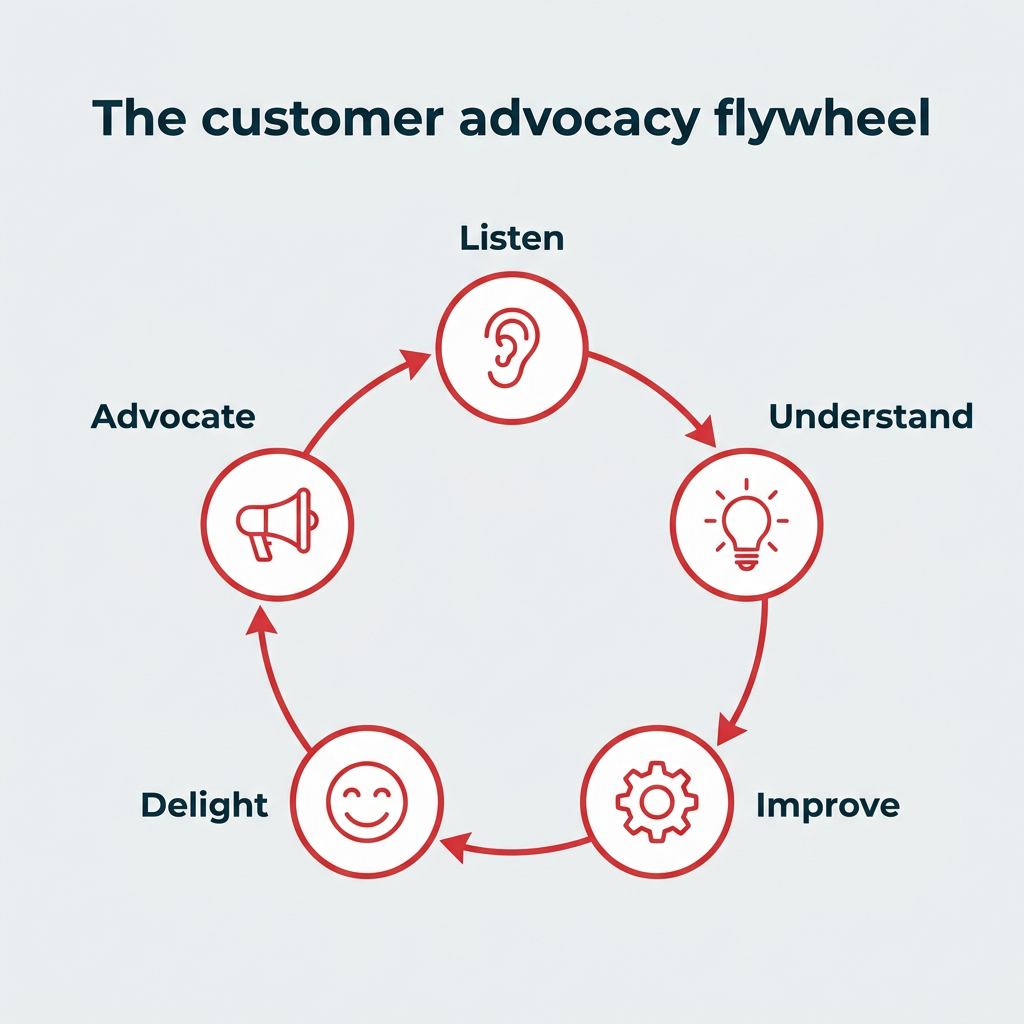
Think of it as a flywheel: You listen, you understand what customers want, you improve the experience, customers feel delighted, and that delight turns into advocacy. Each turn of the wheel gives people something worth talking about.
That’s how advocacy grows, not because you asked for it, but because people are happy to share.
There are eight main ways social media listening increases customer advocacy. Here’s a quick summary before we break each one down:
- Surface customer and prospect insights
- Identify and engage your brand advocates
- Amplify user-generated content
- Respond to feedback and close the loop
- Optimize the customer journey with listening data
- Build customer-centric strategies from listening data
- Benchmark against competitors
- Monitor and improve brand sentiment over time
1. Surface customer and prospect insights
Social listening surfaces what your audience wants from your brand, because they’re already telling you online. You simply have to listen.
From praise to pain points to ideas for improvement, these insights show you what’s working and where there’s room to do better.
When brands acknowledge customer feedback publicly — like Canva on LinkedIn — it helps build trust and shows customers they’re being heard.

The result is stronger products, better customer relationships, and a better experience for the people you’re trying to reach.
2. Identify and engage your brand advocates
Social listening helps you quickly identify the people who repeatedly engage with or mention your brand, products, or services.
By tracking repeat mentions, positive reviews, and ongoing engagement, you can spot potential brand ambassadors in your customer base without having to dig through every comment or post.
Whether it’s a glowing review on X or a TikTok praising your latest product, social listening tools help surface the loudest (or most consistent) voices that matter most.
Brands like Knix leverage user-generated content (UGC) to break up a feed of traditional marketing posts:

Source: Knix
Once you’ve identified advocates, the next step is to engage them. Reply to their posts, reshare their content, and where it makes sense, invite them into partnerships or beta programs. This kind of recognition turns happy customers into long-term advocates.
Pro tip: Spot an influencer praising your brand? Partnering with influencers who already love what you do makes for the most authentic, impactful collaborations.
3. Amplify user-generated content
Social listening helps you find user-generated content worth amplifying, then put it in front of new audiences. UGC carries the trust that branded content can’t buy.
Between heavy filters and professional shoots, it’s hard to know which beauty brands are the real deal. That’s why Haus Labs’ feed is one to watch. The Lady Gaga brand breaks up their grid with UGC that organically boasts their makeup, like Marie-Louise’s makeup tutorial featuring various Haus Labs products.

Before resharing, always ask permission and credit the original creator. From there, build resharing into your regular content cadence so authentic customer voices show up alongside your own posts. A thumbs up from a happy customer (or macro influencer) builds trust faster than any ad.
4. Respond to feedback and close the loop
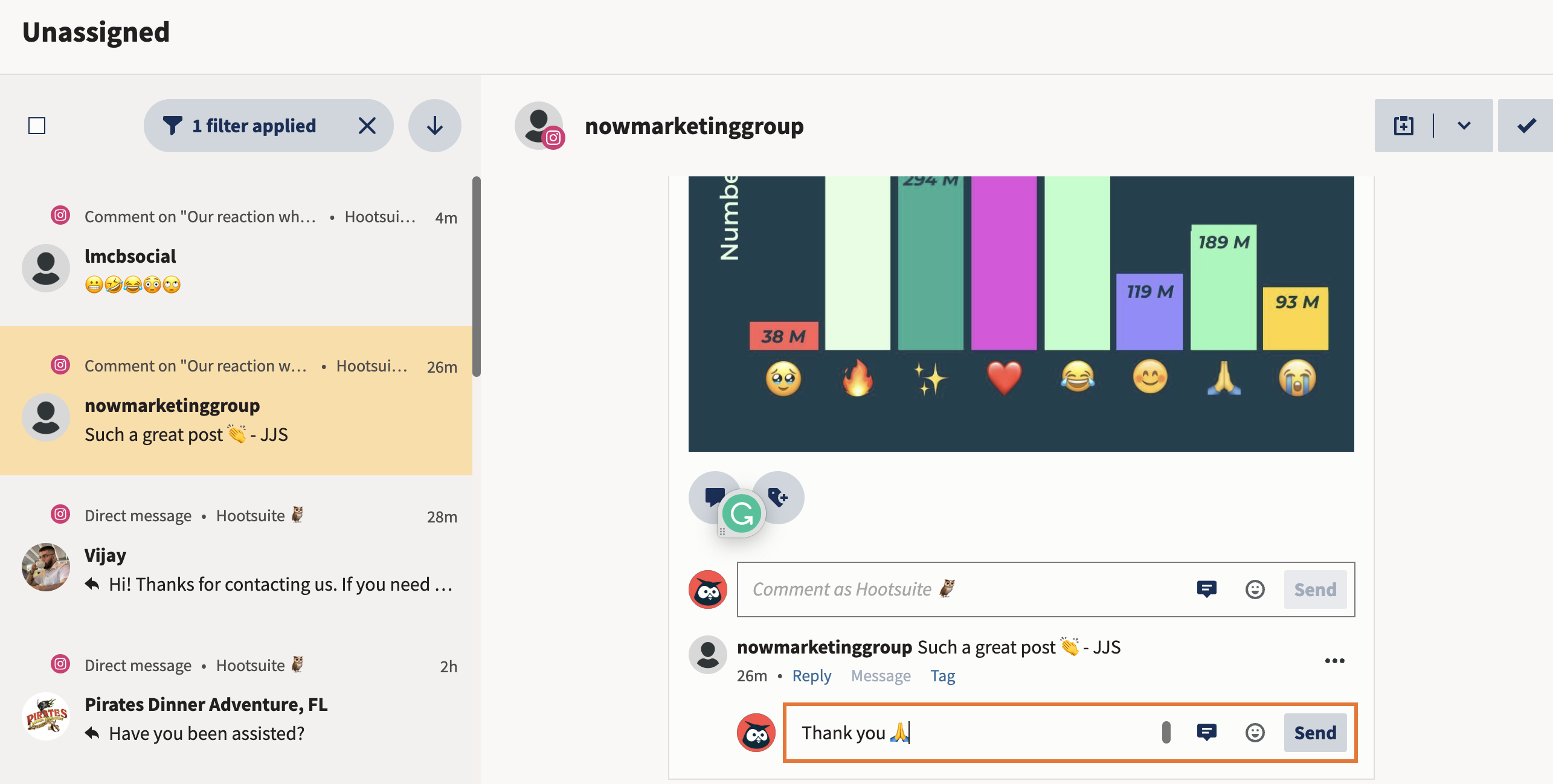
Responding to feedback builds advocacy because people want to feel heard, and a timely public reply shows others that you listen. This applies to both praise and complaints.
A simple framework helps: acknowledge the feedback, address the issue or thank the person, and follow up to confirm it’s resolved. Closing the loop turns a one-off interaction into a reason to come back.
Handling a complaint well in public can do more for advocacy than ten positive reviews, because it shows you stand behind your customers when it counts.
5. Optimize the customer journey with listening data
Listening data can also show you where the customer journey breaks down, because people tend to narrate their experience publicly at every stage. Map what you hear to each stage and you get a clear view of where to fix friction and where to invite advocacy.
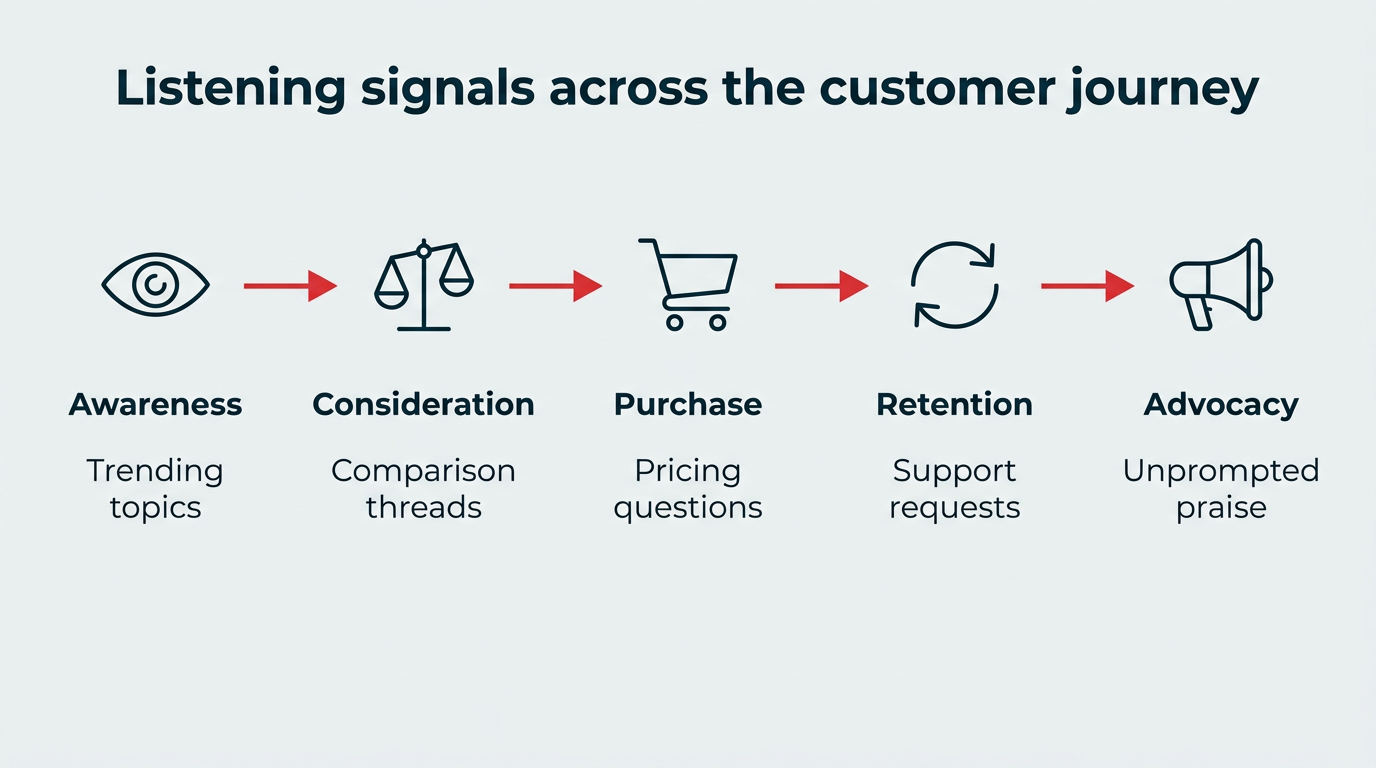
Here’s what listening typically reveals at each stage:
- Awareness: Trending topics, unbranded category questions, and first-time mentions of your brand.
- Consideration: Comparison conversations, “X vs Y” threads, and complaints about competitors.
- Purchase: Pricing questions, checkout friction, and confusion about what’s included.
- Retention: Support requests, feature gripes, and repeat satisfaction signals.
- Advocacy: Unprompted praise, reviews, and UGC you can reshare.
Fix the friction you find in the middle stages, and the advocacy stage gets busier on its own.
6. Build customer-centric strategies from listening data
Social listening helps you build more customer-centric strategies. By looking at patterns in feedback and support requests, you can spot issues or frustrations early.
If the same issues keep coming up, or the amount of feedback outpaces your team’s capacity, that’s a good sign to improve your customer experience.
For example, tech companies like Slack involve customers in their product development process.
Through Slack’s beta program, those who opt-in get updates before they become available to the general public. And if they have concerns or suggestions, they can submit them to Slack’s team as feedback.

Source: Slack
To do this yourself, translate recurring listening patterns into a short list of fixes or features, then prioritize the ones that affect the most customers. When you build what people actually ask for, you turn customers into passionate advocates.
7. Benchmark against competitors
Competitive benchmarking through social listening shows you how people talk about your rivals, where those brands fall short, and how you can win advocates by filling the gap. It’s one of the fastest ways to find an opening.
Track competitor mentions, sentiment, and the topics people complain about most. If customers consistently gripe about a competitor’s slow support or limited features, that’s a signal to lean into the opposite.
Comparing your share of voice against competitors over time also tells you whether your advocacy efforts are moving the needle.
8. Monitor and improve brand sentiment over time
Measuring brand sentiment shows how people are reacting to your brand over time.
Social listening tools can alert you if customer sentiment takes a nosedive (or jumps), so your team isn’t caught off guard. Lumen, the insights and listening app inside Hootsuite Social OS, uses sentiment analysis to tell you how consumers really feel and how many feel that way.

When sentiment shifts, act fast. If it dips, get to the root of the conversation and respond thoughtfully. If it spikes, find out what’s working and double down. Either way, real-time insights make it easier to protect your brand and reply thoughtfully on your social media channels.
Social listening improves customer service by catching the questions and complaints that never reach your support inbox, so your team can respond before a small issue becomes a public one. Most people don’t tag brands when they’re frustrated. They just post.
That’s where listening and service overlap. Listening tells you which conversations need a reply and how urgent they are, based on sentiment and reach. Your team can then prioritize the mentions that carry real risk or real opportunity, instead of working through a queue in the order it arrived.
In Hootsuite Social OS, those signals feed directly into a unified inbox so comments, DMs, and mentions from every connected channel sit in one place. AI-assisted reply suggestions help teams draft faster, and a human still reviews and sends, which keeps the tone right. Governed workflows mean sensitive conversations get routed to the people qualified to handle them.
The advocacy payoff is straightforward. A customer who gets a fast, genuine resolution in public often becomes the loudest voice recommending you, and everyone watching that thread sees how you treat people.
How does employee advocacy amplify social listening?
Employee advocacy amplifies social listening by putting more of your people into the conversations you’re already tracking. When employees share brand content and respond to industry discussions, your brand shows up in more places. Research shows employee-shared content receives significantly more engagement than branded posts, which gives your listening program more signal to work with.
It also works in reverse. Listening insights tell you which topics your audience actually cares about, so you can hand employees content worth sharing instead of generic posts. Hootsuite’s employee advocacy platform makes that distribution easy to manage, with pre-approved content employees can share in a few clicks.
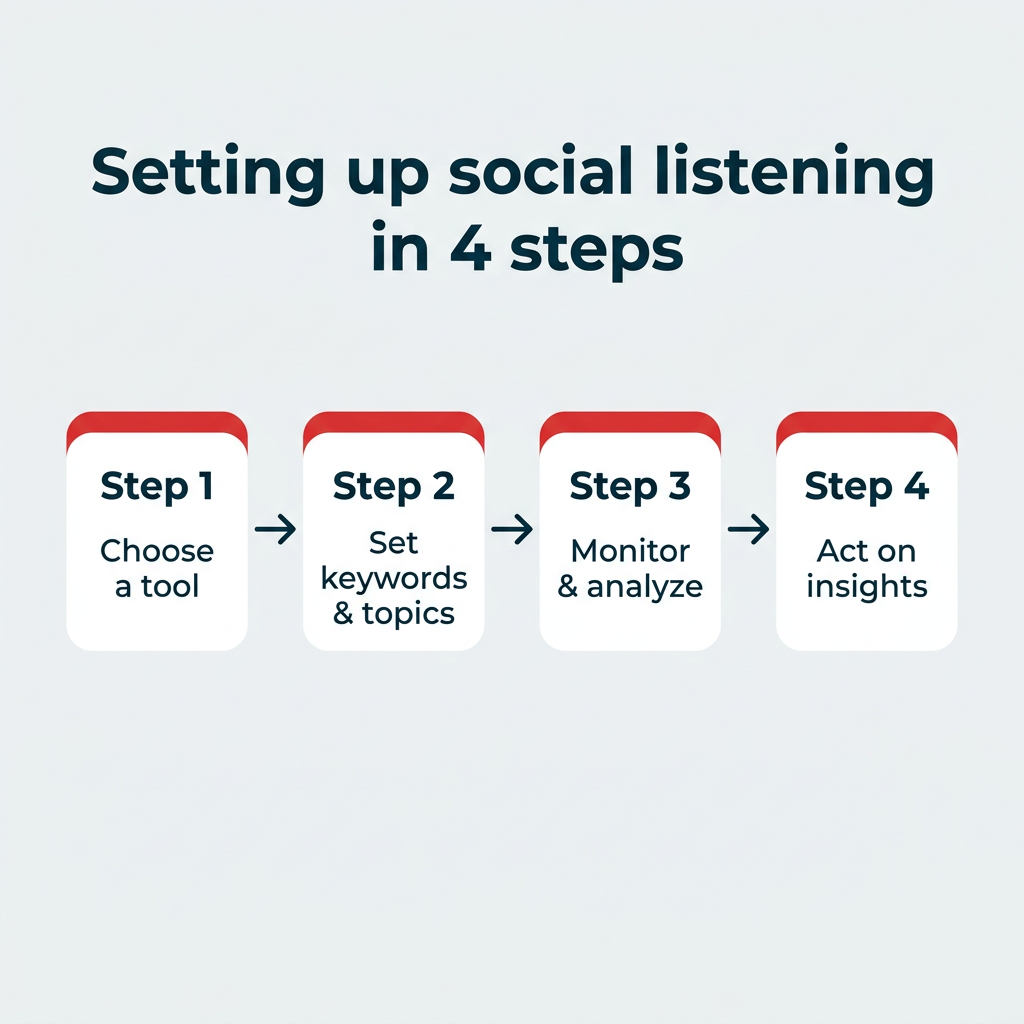
Setting up social listening to find brand advocates takes four steps: Choose a tool, set your keywords and topics, monitor and analyze mentions, then act on what you find. Here’s the quick version before the details:
- Choose a social listening tool
- Set your keywords and topics
- Monitor and analyze mentions
- Act on insights to build advocacy
Step 1: Choose a social listening tool
Start by choosing a tool that fits your needs. Look for sentiment analysis, keyword tracking, competitor monitoring, and integrations with the platforms you already use.
For enterprise teams, Lumen brings all of this into Hootsuite Social OS, so listening data sits next to publishing, engagement, and analytics instead of in a separate tab.


Brand mentions, trending topics, and sentiment at your fingertips. Enhance your social strategy with the insights that matter.
Start your free trialStep 2: Set your keywords and topics
Next, decide what to track: your brand name, product names, competitor names, industry terms, and campaign hashtags.
Use Lumen to discover trending hashtags, brands, and events anywhere in the world, or dive deeper for personalized insights on your brand.
From there, you can track what people are saying about you, your top competitors, and your products across all major social media platforms.
Step 3: Monitor and analyze mentions
Once your keywords are live, monitor what comes in. Lumen lets you analyze things like:
- Key metrics: Are more people talking about you this week? What’s the vibe of their posts? Lumen doesn’t just track what people are saying — it uses sentiment analysis to tell you how they really feel.
- Top themes: How are people talking about you? Are there patterns in the positive and negative feedback? Which other social media conversations are you showing up in?
- Results: Ready to get into specifics? The results view shows you a selection of popular posts related to your search terms — you can filter by sentiment, channel, and more.
Step 4: Act on insights to build advocacy
Finally, turn what you find into action. Respond to mentions, amplify positive UGC, fix recurring issues, and reach out to repeat supporters about partnerships. That last step is how a listening setup becomes a customer advocacy program rather than a reporting habit.
If you want to go deeper, Lumen can show you sentiment over time, top influencers in your space, audience demographics, and much more.
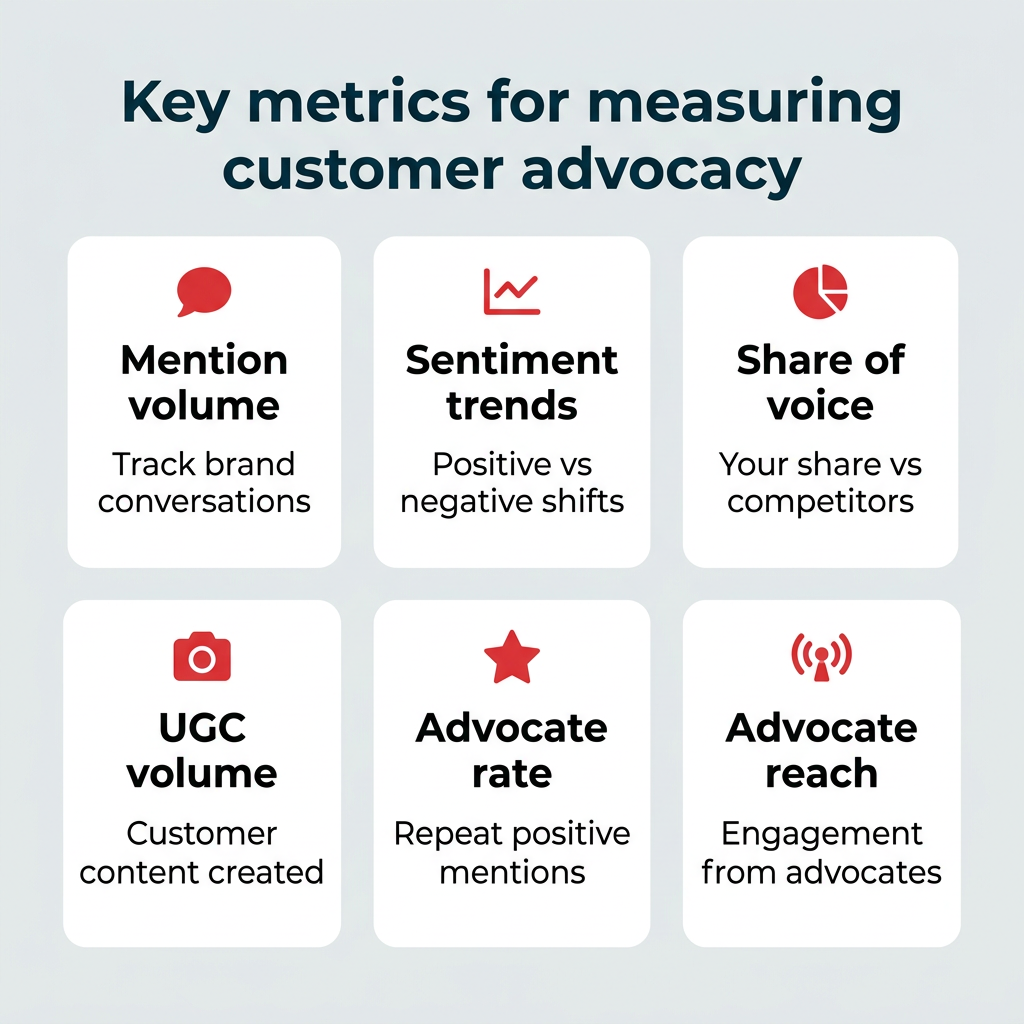
You measure customer advocacy from social listening by tracking how often, how positively, and how widely people talk about your brand over time. These metrics turn a soft concept into numbers you can report to leadership.
Here are the key metrics to watch:
- Mention volume and growth: How many people are talking about you, and is that number climbing?
- Sentiment score trends: Whether brand sentiment is trending positive, negative, or neutral over time.
- Share of voice: How much of the conversation in your category belongs to you versus competitors.
- UGC volume: The amount of customer-created content featuring your brand.
- Advocate identification rate: How many repeat positive mentioners you can spot and engage.
- Engagement from advocate content: How much reach and interaction your advocates’ posts generate.
| Metric | What it measures | Why it matters for advocacy |
|---|---|---|
| Mention volume and growth | Total brand mentions over a set period | Rising volume signals more people talking about you unprompted |
| Sentiment score trend | Ratio of positive to negative to neutral mentions | Shows whether goodwill is building or eroding |
| Share of voice | Your portion of category conversation vs competitors | Proves advocacy is shifting attention your way |
| UGC volume | Customer-created posts featuring your brand | Direct output of advocacy you can reshare |
| Advocate identification rate | Repeat positive mentioners you spot and engage | Builds the pipeline for ambassador and UGC programs |
| Engagement from advocate content | Reach and interaction on advocate posts | Quantifies earned reach you didn’t pay for |
Report these together and you give leadership a clear view of whether advocacy is growing and a solid foundation for proving social media ROI.
Need to see the concept in action? Here are five brands using social media listening to increase customer advocacy.
1. Marlow
Monitoring conversations about your brand and industry online is a powerful marketing tool.
Take menstrual brand Marlow, for example. When concerns about tampons started spreading online, their team sprung into action.

Source: Marlow
They used the moment to do two important things: Reassure customers that their products were safe and spotlight positive online reviews for the ultimate stamp of approval.
The takeaway? A brand that addresses their customers’ concerns head-on can drive customer loyalty.
2. Grubhub
Social listening isn’t just about catching complaints. Sometimes it’s about catching a moment.
When Grubhub’s “Delivery Dance” ad started showing up as a meme online, the team embraced it instead of ignoring it.
They created content around the meme and launched the #DeliverTheRemix contest, inviting followers to help choose the next song for the ad.

What started as mixed sentiment turned into high engagement and brand visibility, and proof that listening closely can help brands respond smarter.
3. HelloFresh
HelloFresh is proof that when it comes to brand advocacy, social listening is the missing ingredient.
Before, the team spent long hours manually monitoring and analyzing data, and missing important mentions where the brand was not directly tagged.
As the company grew, the meal kit provider invested in social listening to monitor brand reputation, analyze customer feedback, and measure the performance of its marketing initiatives.

The result? According to Talkwalker’s downloadable case study, 400% more monthly HelloFresh mentions were identified — and the social team never missed a beat, question, or complaint.
4. Spotify
You know you take social listening seriously when you have an entire X account and website dedicated to it.

While this type of social listening allows users to come directly to them, The Spotify Cares account also monitors tagged and untagged mentions.
That way, they never miss an opportunity to offer support.
5. Cargolux
When Cargolux Airlines International used social listening to measure their move of two beluga whales from China to Iceland alongside Sea Life, they discovered an even bigger opportunity.
By paying close attention to online conversations, the team was able to:
- Increase brand mentions by 20% across the world
- Shape their social messaging based on feedback to maximize engagement
- Increase mentions in a target market, the UK, by 42%

How did they do it? As the story gained traction, Cargolux and its partners stayed closely tuned into social chatter. This helped them keep the conversation going, respond to interest, and make the most of the moment.
In short: To become a brand that your customers want to shout about, you have to show that you understand them inside-out. Only then can you meet their needs, develop a strong consumer-brand relationship, and become their preferred brand.
How can social media listening increase customer advocacy?
How can social media increase customer advocacy and brand loyalty?
How can social media be used to provide effective customer service?
What social media strategies drive customer advocacy?
How do brands turn customers into advocates on social media?
What are examples of customer advocacy campaigns on social media?
How do you measure customer advocacy on social media?
What is the difference between customer advocacy and brand advocacy?
Why is social media listening important for customer advocacy?
How do you build a customer advocacy program using social listening?
Save time managing your social media marketing strategy with Hootsuite. Publish and schedule posts, find relevant conversions, measure results, and more â all from one dashboard. Try it free today.