Table of Contents
It’s time to sell out. You know, the good kind.
Social commerce is a game-changer for digital marketing: it simplifies the buying process for consumers, making it easy for businesses like yours to support.
Key takeaways
- Social commerce lets customers discover, browse, and buy products directly within social media apps.
- The benefits of social commerce include precise targeting, high discoverability, built-in social proof, and direct shopper engagement.
- The best social commerce platforms are Instagram, Facebook, TikTok, YouTube, Pinterest, and Snapchat. Each offers different shopping features, audiences, and use cases.
- Tools like Hootsuite help brands streamline their social commerce strategy by consolidating scheduling, social listening, and analytics in one place.
Social commerce is the process of discovering, researching, and purchasing products directly within a social media platform. Users scrolling on platforms like Instagram, TikTok, or Facebook can browse and buy without ever leaving the app.
Social commerce turns a social feed into a one-stop shop, combining content, discovery, and checkout in a single social shopping experience.
What’s the difference between social commerce and ecommerce?
The key difference is where the transaction happens. Ecommerce typically sends shoppers to a brand’s website to complete a purchase, while social commerce keeps the entire online shopping process — browsing, checkout, payment — inside the social media app.
Let’s take a closer look at how they differ:
| Ecommerce | Social commerce | |
| Where transactions happen | Brand’s website or online store | Directly within a social media app |
| Product discovery | Search engines, ads, and organic traffic | Algorithm-driven feeds, creators, and hashtags |
| Checkout experience | Redirect to external site | In-app checkout (on supported platforms) |
| Social proof | Reviews on product pages | Likes, comments, UGC, and creator endorsements |
Some brands use both social commerce and ecommerce in their marketing strategy. For example, Arc’teryx has a standard e-commerce website.

Source: arcteryx.com
And an Instagram shop, where IG users can buy a $700 parka without leaving the app.

Source: @arcteryx
Want to stay on top of the latest social commerce trends? Here are the numbers that show where things are headed.
- Social commerce is growing fast. The global market is projected to jump from roughly $1.5 trillion in 2025 to nearly $17.8 trillion by 2033.
- For Gen Z, Instagram and TikTok have overtaken Google as the top product-discovery platforms: 30% of 18-to-27-year-olds say they most often find new products on Instagram, 23% say TikTok.
- About 40% of consumers worldwide made a purchase on a social media platform in the past 12 months, according to eMarketer’s 2025 Global Shopper Survey.
- 79% of people have purchased a product or service after watching Reels, according to Meta research.
- 20% of global consumers have bought something on Facebook Marketplace, 16% have bought something on Facebook, and 16% have bought something from Instagram.
These five shifts are fueling the social commerce boom:
- Algorithm-driven discovery
- The creator economy
- Livestream shopping
- Frictionless, in-app checkout
- Social platforms as search engines
1. Algorithm-driven discovery
Traditional e-commerce relies on intent: someone Googles “best face scrub” and ends up on a product page. Social commerce flips that on its head.
Instead of users searching for products, the algorithm serves products to users based on what they watch, like, save, and linger on.
This is why TikTok is now rubbing shoulders with the biggest names in retail. ByteDance (TikTok’s parent company) is projected to become a top-three global retailer by 2030, capturing 14% of global marketplace share, according to a 2026 report.

Source: Flywheel
For brands, this means social commerce rewards content that’s genuinely engaging (not just promotional), because the algorithm needs a reason to keep showing it.
2. The creator economy
Instead of buying from a faceless brand, consumers are buying from influencers and creators they follow, trust, and feel like they know (even if that “knowing” is entirely parasocial, no judgment).
47% of consumers find recommendations from influencers. And 62% have actually purchased a product because of them.
But it’s not just mega-influencers. Creators of all sizes are constantly pumping out unboxings, tutorials, hauls, and product reviews.
That flood of user-generated content creates serious social proof. By the time a shopper hits the consideration stage, they’ve already seen it demoed and stress-tested by dozens of people in their feed.

Source: @ambervcruz
Translation for brands: Creator partnerships often outperform polished ad campaigns — and the organic UGC that follows can outperform both.
Pro tip 💡: Bookmark this guide on the latest influencer marketing rates across Facebook, Instagram, TikTok, and more.
3. Livestream shopping
Livestream shopping involves real-time broadcasts where viewers can buy products instantly, often at a discount. They can also interact with the host in the comments, ask questions, and see a live demo of the product.
And it’s now a core part of commerce. The livestream e-commerce market is expected to reach $6 billion within the next 10 years.
The pull of livestreaming is urgency + entertainment + community, all at once. You’re hanging out with someone who’s hyping a product in real time, and the discount disappears in 10 minutes. It’s an effective way to pull at the FOMO-heartstrings.
4. Frictionless, in-app checkout
This one is simple, but it’s the foundation of everything else: shoppers can now buy without leaving the app.
No bouncing to a website, no creating an account, no re-typing credit card info on a tiny mobile keyboard. Just tap, confirm, done.
And it makes a real difference: 21% of online shoppers abandon their carts because of a complicated or lengthy checkout experience.
Every step removed from the checkout process increases conversion, and social commerce removes a lot of steps.
5. Social platforms as search engines
Gen Z (and younger millennials) treat social platforms as their default starting point for everything, including search. 30% of 18- to 27-year-olds say they most often discover new products on Instagram, and 23% say TikTok — compared to just 19% who say Google.
When the first place someone looks for a product recommendation is TikTok rather than Google, the entire customer journey — research, comparison, decision, checkout — can happen inside one app.
The six best social commerce platforms are Instagram, Facebook, TikTok, YouTube, Pinterest, and Snapchat.
Here’s a quick overview of how they compare:
| In-app checkout? | Key shopping feature | Best for | |
| Yes (U.S. only) ✅ | Instagram Shops + product tags in posts, Reels, and Stories | Discovery through aesthetic feeds and creator partnerships | |
| Yes (U.S. only) ✅ | Facebook Shops + Marketplace | Reaching audiences of all ages with high purchase intent | |
| TikTok | Yes (in select countries) ✅ | TikTok Shop, Live Shopping, and shoppable videos | Algorithm-driven discovery and livestreams |
| YouTube | Yes (links to product page) ✅ | Product tags in videos + product shelf below videos | Reaching the widest age range of any social platform |
| No (links to brand site) ❌ | Product Pins integrated into search and feeds | Capturing high-intent users in active planning mode | |
| Snapchat | No (links to brand site) ❌ | Snapchat Stores on business profiles | Direct, intimate engagement with younger users |
1. Instagram
Instagram Shops is Instagram’s built-in social commerce platform, letting brands tag products directly in posts, Reels, and Stories. Users can then tap, browse, and buy without leaving the app.
Since Instagram already has 3 billion monthly active users, Shops is a great opportunity to access diverse audiences in almost any niche, as long as they’re on mobile (this feature isn’t available from a desktop computer).

Instagram Shops is available in over 20 countries (find a complete list here). Instagram checkout — which allows users to buy directly from the Instagram Shop — is available only in the U.S. In all other countries, shoppers are brought to the brand’s website to check out, but they still stay within the Instagram app.
Why Instagram Shops works:
- Brands can tag products directly in their Instagram photos and videos, and tapping the tag will bring a user to the product’s Shops listing.
- Just like static posts and Reels, users can save products to create wishlists.
- Posts with Shopping tags can be boosted easily using Instagram Ads.
- Shops provide valuable insights, so brands can see how well each product performs.
- Because anyone can tag a Shops product, Instagram Shops is a great tool for collaborating with influencers and creators.
2. Facebook
Facebook Shops is Facebook’s built-in social commerce platform, letting users browse a brand’s storefront and make purchases directly within the app. It’s available on mobile only.

Source: @loverstempo
Why Facebook Shops works:
- Product tags make it simple for users to go from browsing to buying.
- Using Facebook Ads, Shop products can be promoted and aimed at a particular target audience.
- Products that are published on Facebook Shops can show up on Facebook Marketplace (where Facebook users go specifically to shop).
3. TikTok
TikTok Shop lets brands tag products in videos (including livestreams) and allows buyers to check out within the app.
It’s available in select countries, including Indonesia, Ireland, Malaysia, Mexico, the Philippines, Singapore, Spain, Thailand, the United Kingdom, the United States, and Vietnam.

Source: TikTok
If TikTok Shop isn’t available in your country yet (for example, Canada), you can still use TikTok Ads to link directly to your ecommerce site. The link appears as a “Shop now” button on your video.

Source: @nicole.delosreyes
Why TikTok Shop works:
- Shoppable videos provide users with direct links to products, and consumers can come across your product organically and checkout without leaving the app.
- Users can browse through your TikTok Shop on your profile page.
- For more intentional shoppers, the Shop Tab feature allows for searching and browsing.
- Live Shopping is a great way to engage with potential buyers in real time.
4. YouTube
YouTube Shopping lets brands add product tags that appear during videos and on a product shelf below the player. This makes it easy for viewers to shop without interrupting what they’re watching.
YouTube Shopping doesn’t get as much attention as the others on this list, but don’t count it out — it’s the most used social media platform across all age groups, so shoppable content has the potential to reach a very wide audience.

Why YouTube Shopping works:
- Product tags pop up during videos, so viewers can browse and shop without pausing what they’re watching.
- You can promote more than one product per video (up to 30).
- Products appear on a “shelf” under your YouTube video, so even if a user closes the pop-up shopping button, they can still easily access your shop.
- Businesses or other users can promote products, which is a great opportunity for creators and brands to collaborate.
5. Pinterest
Pinterest’s social commerce feature is Product Pins. These are shoppable pins that send users directly to a product page on the brand’s website, all within the Pinterest app.
From a shopper’s perspective, Product Pins are very simple. They show up organically and in search, almost identical to other pins. The only difference is a little shopping tag icon.

Source: Pinterest
Why Pinterest Product Pins work:
- Product pins are integrated almost seamlessly with regular pins, so they don’t appear like typical ads.
- Product pins are highly searchable and come up organically as users are scrolling.
- Product pins can be uploaded from a data source (as in, a spreadsheet with all your details on pricing, product info, etc.) so it’s easy to input lots of products at once.
6. Snapchat
Snapchat Stores let brands with a verified business profile sell products directly within the app. The store shows up in a Shop tab on its profile, similar to Facebook and Instagram Shops.

Source: Snapchat
Why Snapchat stores work:
- Brands can tag products in their Snapchat stories, driving traffic to their shoppable items.
- Users can subscribe to Snapchat stores and be notified of new product drops.
- Snapchat is the communication platform of choice for Gen Z. So, if your target audience is Gen Z age, you can find them on Snapchat.
Four brands that are nailing social commerce right now are Strawberry Milk Mob, Miss Jacobs Little Learners, Go Whistler, and Jade Leaf Matcha.
Here’s what each one is doing well, and why it works.
1. Strawberry Milk Mob
Strawberry Milk Mob is a swimwear brand with a notable TikTok presence (2.4 million followers). The brand uses social media to generate hype around sales, promotions, and new product drops — like this behind-the-scenes video:

Source: @strawberrymilkmob
Why this works:
- This video shows how social media can build buzz around a product before it’s even available.
- The TikTok has an honest, authentic vibe, with the brand’s founder showing up and genuinely sharing her excitement about the drop.
- The video asks for any advice regarding the brand’s website design, giving followers an opportunity to share opinions (and more comments = better engagement).
2. Miss Jacobs Little Learners
Miss Jacobs Little Learners is an educational supply brand that sells classroom labels, organization tools, and teaching resources.
On TikTok, the brand posts ultra-satisfying classroom organization videos that double as product demos, like this one showing their labels in action.

Source: @missjacobslittlelearners
Why this works:
- This TikTok uses the “Shop now” button, instantly driving traffic to the brand’s e-commerce site and making it easy for viewers to purchase the product.
- The video exemplifies a show, don’t tell strategy: instead of talking about how great the product is, it shows the classroom labels in action.
- The video has over 5,000 saves, meaning that TikTok users found it inspiring and worth coming back to.
3. Go Whistler
Go Whistler is a tourism company for Whistler, British Columbia. The brand capitalizes on Pinterest’s visual-first format by publishing pins that combine text and images for informative, save-worthy content.
Check out this “Local’s List” pin highlighting things to do in Whistler:

Why this works:
- This pin has useful, evergreen information that people will want to save, which increases its chances of appearing organically on Pinterest.
- The caption of this pin follows social SEO best practices. It includes keywords like “wildflowers,” “bike trails” and “Crankworx” (a popular mountain bike festival in August).
- The brand is selling an experience, not a product, but demonstrates how stunning visuals can communicate a feeling that people are willing to travel for. In other words, it pays to get a good photographer.
4. Jade Leaf Matcha
This organic Japanese matcha brand collaborates with creators (and celebrities) to market a very aesthetic product — perfect for Instagram’s audience. This partnership with @allthingslillyann is a great example.

Source: @jadeleafmatcha
Why this works:
- Instagram shopping tags show viewers that the product in the video is shoppable.
- This product starts with a hook that’s not too sales-y: “The best hack for blueberry matchas at home.”
- The video is educational (and therefore valuable) to viewers even if they don’t end up buying the product. They may save the post instead, which is also good for the brand’s engagement and ranking.
Psst: The communications manager of Jade Leaf Matcha offers her social commerce tips later on in this post.
The top benefits of social commerce include precise targeting, high discoverability, access to younger audiences, built-in social proof, and direct engagement with shoppers.
Let’s dive deeper into these benefits:
- Precise audience targeting: Unlike more traditional forms of advertising (we see you, billboards and blimps), social commerce allows you to target specific demographics and communities. You can select the age, gender, location, and even interests you’d like to target.
- High discoverability: On algorithm-driven platforms like TikTok and Instagram, users don’t need to be searching for your product to find it. The platform surfaces it for them, which means even small or new brands can land in front of the right audience without a massive ad budget.
- Access to younger audiences: Gen Z and younger millennials spend more time on social networks than anywhere else. Social commerce lets you meet them on the platforms they already prefer.
- Built-in social proof: Every like, comment, review, and UGC video acts as a recommendation. Shoppers can see real people using your product before they buy, which builds trust fast.
- Direct engagement: Social commerce lets you interact with potential buyers in real time through comments, DMs, or livestreams. That two-way conversation builds trust and can influence purchases on the spot.
- Increased sales: Social commerce shortens the distance between discovery and purchase, so brands can turn engagement into revenue without ever sending shoppers off-platform.
Put together, these benefits make social commerce one of the most efficient ways to turn scrolling into shopping.
The biggest challenges of social commerce are platform dependency, lower consumer trust, customer service complexity, and difficulty standing out in crowded feeds.
Before diving in, brands need to be aware of a few legitimate trade-offs:
- Platform dependency: Algorithm changes, policy updates, or platform fees can directly impact your sales overnight, and there’s not much you can do about it.
- Lower consumer trust: Counterfeits, scams, and low-quality dropshipped products have made some shoppers wary of buying directly from social platforms, especially from brands they’ve never heard of. This is why social proof is so important.
- Customer service complexity: Buyers often expect support in the same place they bought the product (DMs, comments, replies to stories). That can stretch teams thin, especially if they don’t have a social inbox tool like Hootsuite.
- Hard to stand out: Social commerce is crowded. With every brand and creator pushing products in the same feeds, breaking through requires either a strong creator strategy, a genuinely distinctive product, or a healthy ad budget (often all three).
The good news: every one of these challenges has a workaround, and the brands winning at social commerce have figured most of them out.
We asked Siona Baldwin, Communications Manager of Jade Leaf Matcha, for advice on how to maximize social commerce success. Here are her top tips:
- Be descriptive in your product information
- Use relevant hashtags
- Create social media hype around new launches
- Collaborate with creators and influencers
- Leverage user-generated content
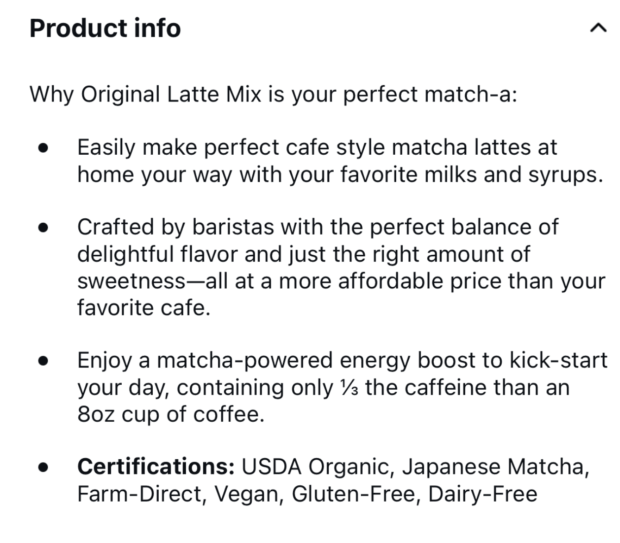
1. Be descriptive in your product information
Think of your product info section like a mini landing page.
“Don’t just add the basics, like price or size,” Baldwin says. “Add short additional selling points about why the product is special.”
Jade Leaf Matcha, for example, includes caffeine content, a flavor description, certifications (like USDA Organic), and reasons why it’s a good coffee alternative. “It helps convert new customers who are just discovering matcha,” Baldwin explains.
Source: @jadeleafmatcha
A good product description doesn’t just inform potential buyers. It also gives the platform’s search engine and algorithm the data it needs to show your content to the right audience.
2. Use relevant hashtags
Hashtags act as hints for social algorithms to understand what your content is about and who it’s relevant to. So, strategic hashtagging can make sure your social content ends up on the right feeds.
Baldwin recommends using a mix of broad and niche hashtags (e.g., #matcha and #matchagirlie), and also incorporating lifestyle and seasonal hashtags (e.g., #springdrink).
“We like to update hashtags based on trends and tailor them to our product benefits, like #energyboost,” Baldwin shares.

Source: @jadeleafmatcha
3. Create social media hype around new launches
Not all of your social commerce content needs to link directly to a product. In fact, generating buzz about a new offering before it’s available can be just as effective.
“We love to start teasing new products 1-2 weeks before the launch,” Baldwin says.
Jade Leaf Matcha uses sneak peeks, countdowns, and “something new is coming” hints to build interest, and even rewards early buyers with exclusive discounts.

Source: @jadeleafmatcha
Baldwin points to the brand’s launch of Matcha Lemonade as an example: cryptic hints about flavor and close-up product shots were posted ahead of the official release. “By the time launch day hit, people were ready, and the excitement helped us have a huge summer kickoff,” she shares.
4. Collaborate with creators and influencers
Take a quick scroll through Jade Leaf Matcha’s feed, and you’ll likely recognize actress Lili Reinhart, who has partnered with the brand to promote their products.
While celebrity collabs aren’t within reach for every brand, even small brands looking to partner with micro-influencers can learn from this social commerce strategy.

Source: @jadeleafmatcha
“Partner with influencers who genuinely align with your brand values and target audience,” Baldwin advises. She explains why Lili Reinhart is perfect for Jade Leaf Matcha: “She’s passionate about mental health, self-love, and she’s a longtime matcha lover.”
Value alignment will help your partner incorporate your brand naturally into their existing content — for example, Lili Reinhart’s ASMR matcha video.
5. Leverage user-generated content
User-generated content builds trust faster than traditional ads. Full stop.
Baldwin adds that user-generated content creates a more authentic, relatable brand experience. Plus, it’s great for businesses that have smaller marketing budgets or limited resources.

Source: @jadeleafmatcha
Jade Leaf Matcha incorporated UGC into paid promotions for their National Matcha Day sale.
“We tested three different hooks to see which one performed best, then shifted our spend to the winning creative,” Baldwin explains. “This approach helped optimize our performance and increase sales.”
Hootsuite gives brands the functionality to manage and optimize their social commerce strategy in one place. Here’s how:
Schedule posts for the right time
Using Hootsuite, you can schedule your posts to go live when the majority of your audience is online. This gives your social marketing campaigns the most visibility and the best chance of reaching shoppers.
Monitor brand mentions and engagement
Don’t let people talk about you behind your back — Hootsuite Listening lets you monitor brand mentions and measure your engagement so you can be part of the conversation and know what the buzz is about.
Analyze performance metrics
There’s no one way to succeed with social commerce, but Hootsuite Analytics will tell you exactly how your content is performing. It’s the simplest way to figure out what’s working and what’s not — and which social commerce strategies to invest in.
FAQ: Social commerce
What is social commerce and how does it work for brands?
How do businesses use social commerce to increase sales and conversions?
What social media platforms are best for social commerce?
How do enterprises measure ROI from social commerce strategies?
Social commerce vs ecommerce: what’s the difference for brands?
Save time managing your social media marketing with Hootsuite. Publish and schedule posts, find relevant conversations, engage your audience, measure results, and more — all from one dashboard. Try it free today.