Table of Contents
Key takeaways
- Social media is a core business channel. It helps brands build brand awareness, generate leads, and strengthen customer relationships across every major platform.
- Strategy comes before posting. Clear goals, the right platforms, and a documented content plan are the foundation of a social media strategy that works.
- Measurement turns activity into proof. Tracking engagement, traffic, and conversions is how you demonstrate return on investment to leadership.
- Connected tools make social manageable. Apps inside Hootsuite Social OS help teams plan, publish, listen, and respond from one system.
The benefits of social media for business come down to reach, relationships, and data. With 5.66 billion people using social media worldwide as of October 2025, it is the fastest way to get in front of new audiences and hear directly from existing customers.
Used strategically, social media can power marketing, customer service, market research, and lead generation all at once. Here’s a quick rundown of how to use social media for business.
Increase brand awareness
Social media is one of the easiest ways to get your brand in front of new people. 83% of marketers cite increased exposure as the leading benefit of social media marketing.
Post consistently, and your content can spread through shares, hashtags, and algorithm recommendations. Suddenly, people who’ve never heard of you before are seeing your brand. That discovery effect matters: social networks are one of the top channels people use to research brands before buying.
Parody magazine Hot Teen did exactly that. The brand built a following on Instagram before launching its first issue, because the first step of any business plan is simple: make sure people know you exist.

Source: @hotteenmagazine
Engage directly with your customers
Social media gives brands a direct line to their customers.
On platforms like Facebook, Instagram, and X, teams can respond directly to questions, join conversations, and address concerns in real time. It feels faster and more personal than email or a 1-800 hotline.

Source: Canva
Use that direct connection to build relationships with customers. (Brush up on social media customer service tips here!)
Generate leads and drive sales
Social platforms give marketing and sales teams direct access to large, highly targeted audiences. U.S. advertisers alone are forecast to spend over $121 billion on social networks in 2026.
Beyond relationship-building and social selling, most platforms offer pretty sophisticated advertising and targeting tools. You can reach specific audiences based on demographic information, location, language, interests, and online behavior, so you only pay to reach the people most likely to care.

Over time, this helps build a steady pipeline of new prospects for your business.
Conduct market research
Social media is a valuable market research channel that helps you tap into what your customers think.
With social listening and analytics tools, your team can track conversations, spot trends, and uncover insights about customer preferences and behavior. That data can inform everything from product decisions to marketing strategy.

Manage your reputation
People are already talking about your brand online. The question is whether you’re paying attention.
Social listening helps your team track what’s being said, respond to any issues quickly, and catch potential reputation problems before they snowball. It also gives you a chance to turn feedback into something useful.

Beauty brand Wonderskin, for example, noticed a wave of negative comments about its makeup products. Instead of ignoring them, the team created a video explaining how to fix the most common problems.

Source: @wonderskin
Being active on social media is important for any business interested in protecting its reputation.
Spotting negative sentiment is the first step to nip problems in the bud. On the flip side, celebrating your biggest fans and advocates may encourage more people to show your brand a little love.
Learn more about social media reputation management here!
Prove your ROI
One of the biggest challenges in marketing is proving return on investment. Social media analytics tools make that much easier.
Tools like Google Analytics integrate with Perch, helping you connect the dots between social activity and website traffic, conversions, email sign-ups, and ROI for both organic and paid social media campaigns.
UTM parameters are another tracking tool to see which platforms and campaigns are driving results.
An effective social media strategy for business starts with clear goals and a deep understanding of your audience. From there, choose the platforms where they spend their time, create content that speaks to them, and decide how you’ll measure results.
Here’s a simple framework to get started (and a free strategy template to document it):
- Set clear social media goals
- Identify your target audience
- Choose the right social media platforms
- Analyze your competitors
- Set up measurement and reporting
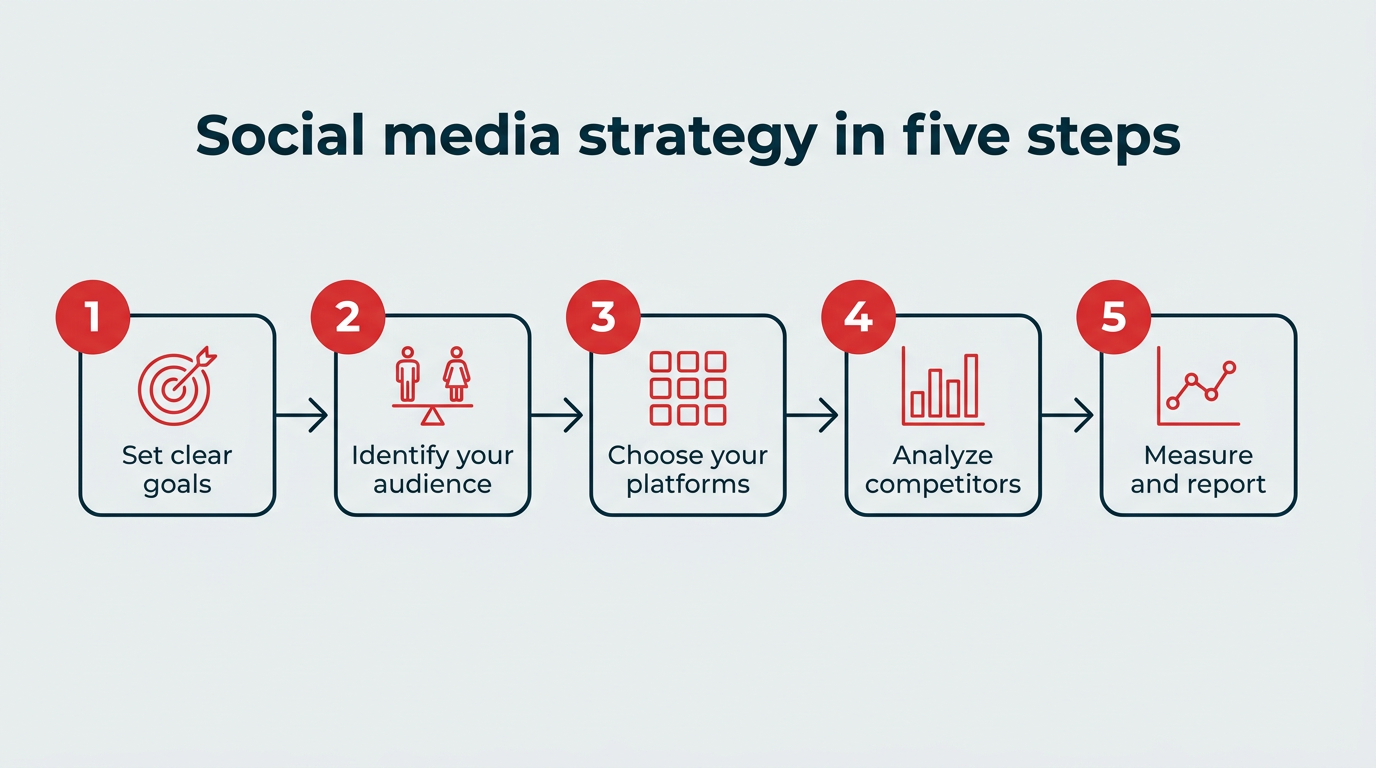
1. Set clear goals
Without well-defined goals, measuring success and return on investment (ROI) is next to impossible.
Before you start posting up a storm, create a social media marketing goal that follows the SMART criteria (that means specific, measurable, attainable, relevant, and time-bound).
It’s important to avoid getting caught up in vanity metrics like the number of followers and likes. These stats may not reflect the true value of your performance. Instead, focus on meaningful metrics like engagement, click-through rates, and conversion rates.
Need some examples of SMART social media goals? We’ve got you.
2. Identify your target audience
Social listening tools can reveal a lot about the people interacting with your brand. By digging into your data, you can uncover key details like audience demographics, locations, and how people engage with your social media content.

Lumen analyzes conversations from 150 million websites and 30+ social media channels, including blogs, forums, news sites, and more.
Use it to track engagement volume, reach, sentiment, and emerging trends, then segment your data to understand what audiences are saying and how those conversations shape your brand.
Need help making sense of all that data? Open a chat with Wisdom, Hootsuite’s social-first AI agent. Ask it to summarize key themes, explain what’s driving a spike in mentions, or turn listening insights into next steps for your content, customer care, or brand strategy.

Here’s a simple guide and template for creating audience/buyer personas.
3. Choose the right social media platforms
Not every social platform attracts the same audience or rewards the same type of content. Pew Research found that 80% of U.S. adults 18 to 29 use Instagram compared with just 19% of those 65 and older. The key is focusing on the channels where your target audience already spends their time. (There’s a full platform breakdown in the next section.)
Take Fenty Beauty, for example. Beauty fans are everywhere on TikTok, and 81% of TikTok Shop sales in the U.S. come from health and beauty products. That makes TikTok a natural place for Rihanna’s cosmetics brand to show up.

Source: @fentybeauty
It’s also important to think about the kind of content your team can realistically create. If short-form video content doesn’t highlight your product well or stretch your resources, it may make more sense to prioritize a platform like Pinterest or Instagram instead.
4. Analyze your competitors
Smart brands keep an eye on their competitors’ social activity to see what’s working, what’s not, and where opportunities might exist.
Industry benchmarking can also reveal valuable insights about your audience, industry trends, and the strategies other brands are using.

Looking at their content, engagement, and campaigns can reveal useful insights you can apply to your own strategy. Want to dig deeper? Here’s a guide to running a competitive analysis on social media.
5. Set up measurement and reporting
Decide how you’ll measure success before you publish your first post. It’s much harder to prove impact retroactively than it is to set up tracking from day one.
Pick two or three KPIs per goal, connect your social media analytics to your website data, and set a reporting cadence your team will actually stick to. Monthly works for most businesses, with a weekly pulse check on anything tied to a live campaign. In short: agree on what “good” looks like before you start, and reporting becomes a five-minute task instead of a scramble.
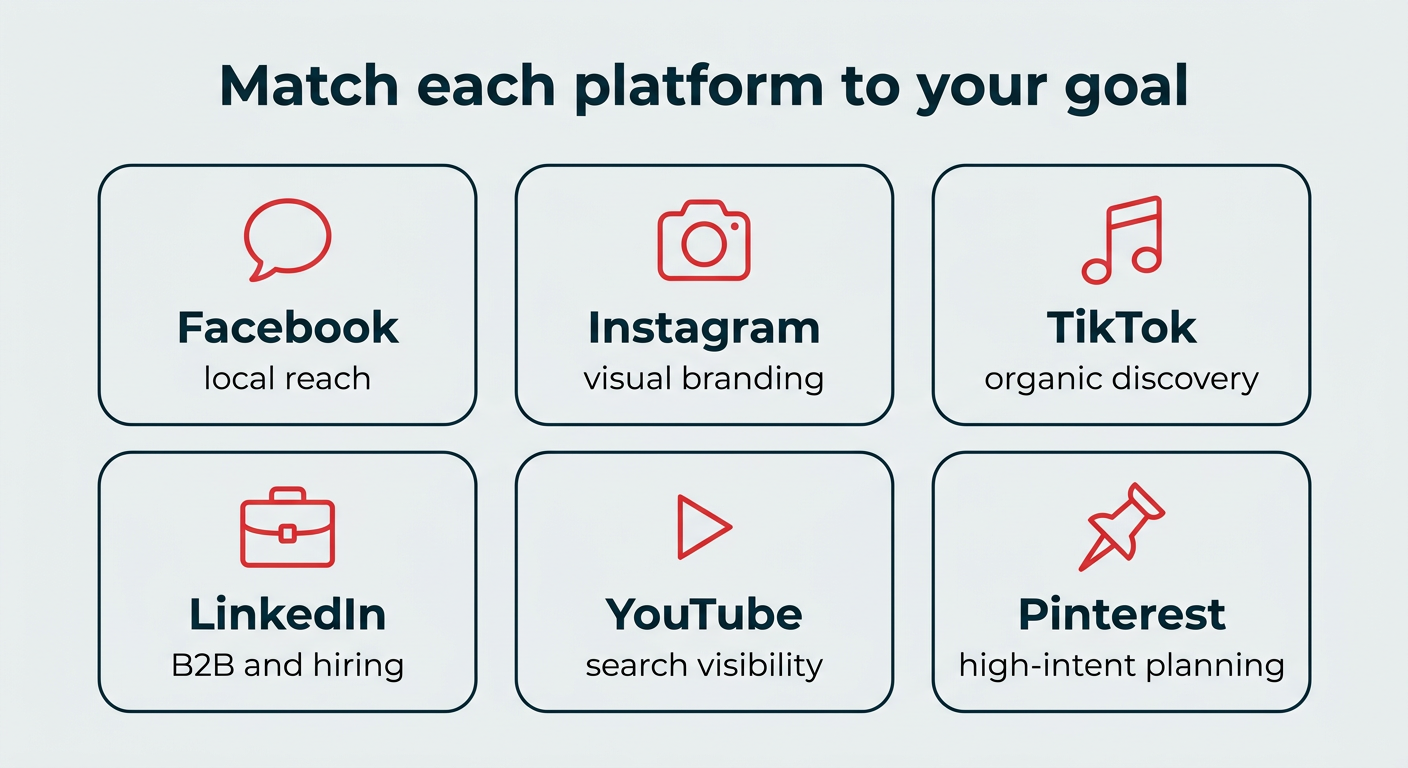
The right social media platforms for business are the ones where your audience already spends time and where your team can realistically produce content. Most businesses do better on two or three channels than on six they can’t maintain.
Here’s how the major platforms compare.
Platform | Best for | Primary audience | Top content format | Business use case |
|---|---|---|---|---|
Local reach and community | Broad, skews 25 to 54 | Video, links, Groups | Local marketing, events, customer service | |
Visual brand building | Skews 18 to 34 | Reels, carousels, Stories | Product discovery and social commerce | |
TikTok | Fast organic discovery | Skews 18 to 34 | Short-form video | Awareness, trends, creator partnerships |
B2B and recruiting | Professionals, 25 to 54 | Text posts, documents, video | Lead generation, thought leadership, hiring | |
YouTube | Long-term search visibility | Broad, all age groups | Long-form video and Shorts | Tutorials, product education, evergreen content |
High-intent planning | Skews female, 25 to 44 | Pins and idea Pins | Ecommerce traffic, home, food, fashion, DIY |
If you’re weighing where to start, match the platform to your goal rather than to its follower count. A B2B software company will get more from a niche channel like Pinterest only if its audience plans purchases there, whereas LinkedIn is usually the safer bet.
A social media content plan documents what you post, how often, and why. It’s what keeps your feed from becoming a mix of last-minute product promos and forgotten campaigns.
Two decisions do most of the work: your content mix and your posting cadence. Everything else follows from there.
Define your content mix
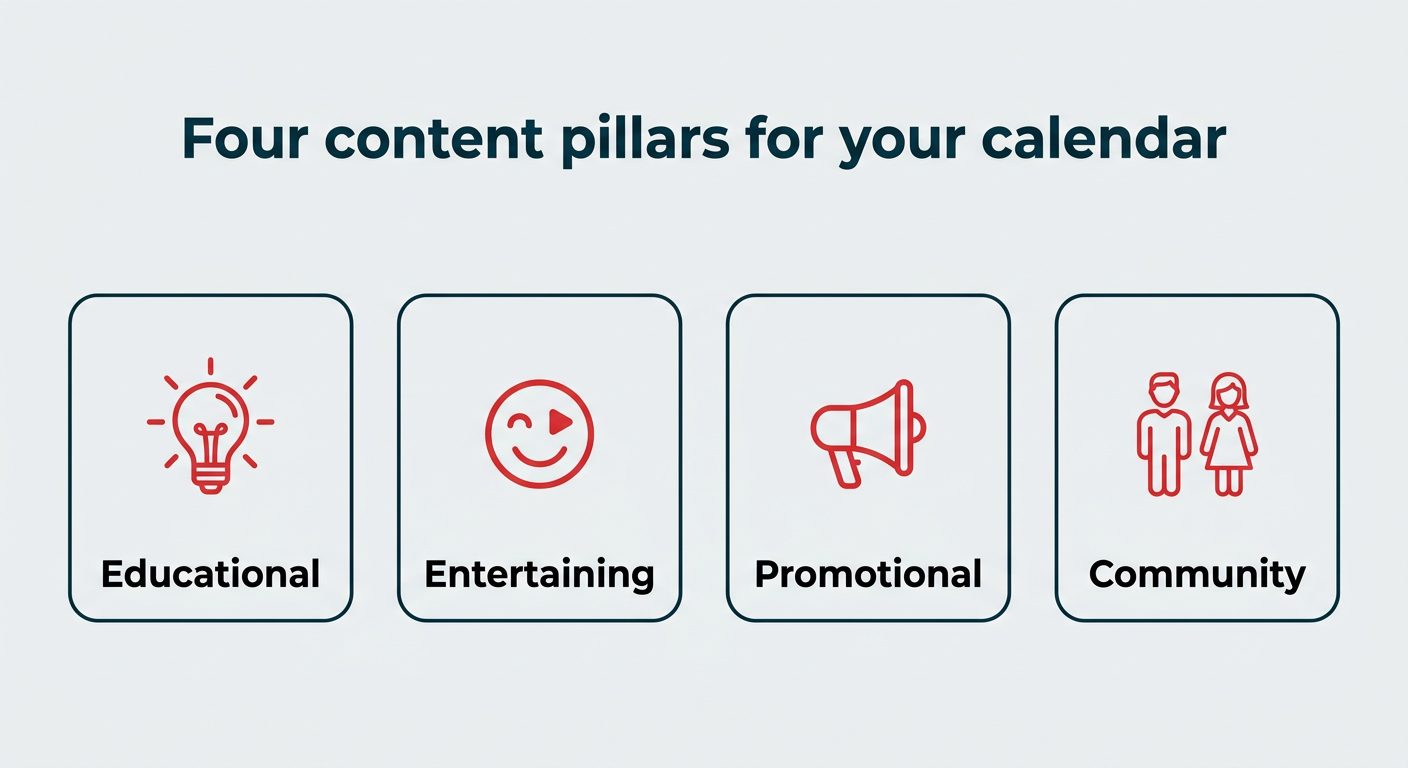
Most brands build their calendar around a handful of content pillars, then rotate through them:
- Educational: How-tos, tips, and explainers that solve a real problem for your audience.
- Entertaining: Trends, humor, and behind-the-scenes content that earns attention.
- Promotional: Product launches, offers, and direct calls to action.
- Community: Customer stories, replies, and reposts that show real people using your product.
Food brand Delish leans into the educational and entertaining pillars by posting mouth-watering, share-worthy recipe Reels. Want the full recipe? Viewers need to head to the Delish website or app. It’s a simple way to turn strong content into traffic straight from social.

Source: Delish
The community pillar is often the easiest to fill, because your customers are already making content for you. Encourage them to share photos or videos with a branded hashtag (think #myLevis), then repost the best ones. User-generated content keeps your calendar full and doubles as social proof.
White Fox does this well, reposting photos of customers wearing its clothing to keep its feed full of authentic, community-driven content.

Source: White Fox
Also decide upfront how you’ll split organic and paid. A common approach is to publish organically, then put budget behind the posts that already perform well, rather than boosting everything indiscriminately.
Optimize for discovery with social SEO and hashtags
Hashtags may not be the only discovery tool anymore, but they still help boost visibility and connect your content with the right communities.
For example, a bookstore might use #BookTok to reach TikTok’s massive reading community, while a business in Edmonton, Alberta might add #yeg so locals can easily find its posts. (Here’s our guide to using hashtags for every social network to help you get started.)
The Arizona Coyotes lean into this strategy by using the same #YotesForever hashtag their fanbase uses on X.

Source: @ArizonaCoyotes
But hashtags are only part of the story. Social platforms are becoming search engines, which means keywords matter too. Including clear, descriptive language in your captions helps algorithms understand and surface your content.
To build a strong social media presence, businesses need consistent habits that help them engage audiences, create valuable content, and refine their strategy.
Start with these social media best practices.
1. Practice social listening
Social listening is a great way to track discussions about your brand, products, and industry. Just set up a stream searching for your handle or a pertinent keyword. Monitor mentions, the good and the bad.

Source: Taco Bell
Social listening is like a superpower, one that helps you understand customer sentiments and respond effectively to feedback.
2. Collaborate with influencers
Social media has created its own ecosystem of creators with loyal, highly engaged audiences. Partnering with the right influencer can help your brand reach new communities and build trust faster than traditional advertising.
These partnerships can take many forms, from one-off sponsored posts to longer-term ambassador programs. Our influencer marketing guide is a great way to get up to speed.
And you don’t need a celebrity with millions of followers to see results. For example, Adobe partners with digital artists, from niche creators to well-known influencers, to show how people use its tools in real life.

Source: edgykatrina
3. Engage with your community
Your feed isn’t the only place your brand can show up on social media. The comments section is where the real conversations happen.
When someone asks a question or leaves a comment, responding helps turn social media from a one-way broadcast into a genuine conversation. Respond to comments, messages, and mentions when you can. Ask questions, start convos, and show your audience that someone is actually listening on the other side of the screen.
Case in point: the example below from Beehiiv.

Source: Beehiiv
Chewy takes a similar approach in its TikTok comments, replying to followers individually rather than letting the conversation die under the post.

Source: Chewy
Great interactions can even become content themselves. Clever replies, helpful explanations, or humorous responses can be shared on your feed to highlight your brand personality. Here are 19 ideas for super engaging posts.
4. Post with authenticity and personality
Authenticity and personality are two important ingredients for brands to stand out in crowded social feeds. Which makes sense: people come to social media for real stories, real voices, and real interactions.
Show some personality and be genuine in how you communicate. Transparency builds trust, and audiences are more likely to connect with brands that feel human.
For example, SiennaStudios gives followers a peek behind the scenes, sharing how its handcrafted art comes to life. It’s a simple way to turn the creative process into engaging content.

Source: SiennaStudios
Creative framing helps here too. Jewelry brand Freshly Unbothered turned its crystal bracelets into a playful “moods of the week” carousel, giving each piece its own cheeky personality.

Source: @freshlyunbothered
5. Stay on top of trends
Social media moves fast. If you want to boost your reach, keep an eye on emerging trends and new formats.
Follow online tastemakers, browse the explore page, and stay active on the platforms you use. This helps you spot trends early and decide which ones make sense for your brand.
For example, Solidcore jumped on the “Beez in the Trap” trend with a video featuring three of its coaches.

Source: Solidcore
It’s also important to stay up to date on how platform algorithms evolve. The tactics that work today may not tomorrow, so keep an eye on updates and adjust your strategy as needed.
Explore more social media best practices here.
6. Be consistent with your posting
Social media audiences appreciate brands that show up regularly. Posting consistently keeps your business top of mind and helps build momentum over time.
Using a content calendar can make this easier by allowing your team to plan posts around campaigns, holidays, and seasonal events. In other words, no more scrambling for ideas at the last minute.
For example, in the month leading up to Easter, Crayola shared posts featuring products that would work well in Easter baskets, along with new seasonal color themes.

Source: @crayola
7. Experiment with paid social
Social media platforms offer powerful targeting tools, and you don’t need a massive budget to start using them.
You can boost an organic post that’s already performing well or run a dedicated ad campaign to reach new audiences. Want to learn more? Here’s a no-nonsense guide to social ads.
8. Learn from your analytics
Use social media analytics to track how your posts and campaigns are performing. Looking at what works (and what doesn’t) helps your team spot patterns and make smarter decisions.
Over time, those insights help you refine your strategy, create stronger content, and keep your key metrics moving in the right direction.
Turn customer conversations into your next breakthrough product
Request a demo to see how Hootsuite can help your product team discover emerging trends, validate ideas with real customer insights, and bring better products to market faster.

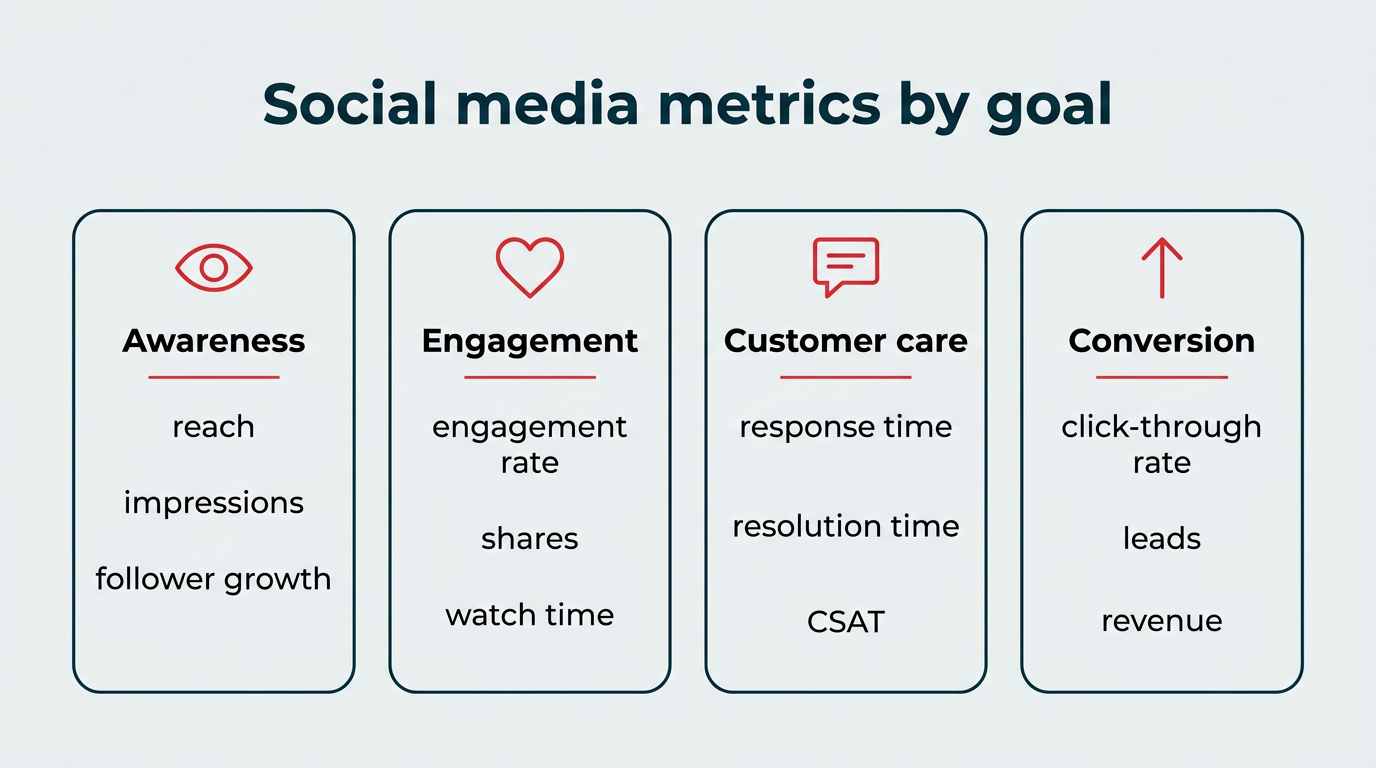
Measuring social media success means connecting platform activity to business outcomes. That starts with choosing metrics that map to your goals instead of tracking everything at once.
Here are the metrics worth watching, organized by what you’re trying to achieve:
- Awareness: Reach, impressions, follower growth, and share of voice.
- Engagement: Engagement rate, saves, shares, comments, and video watch time.
- Customer care: First response time, resolution time, and CSAT scores.
- Conversion: Click-through rate, landing page traffic, leads, and revenue attributed to social.
Once you’ve picked your metrics, set a reporting rhythm. Review campaign performance weekly while it’s live, then report on social media ROI monthly or quarterly for leadership. Pair platform data with website analytics so you can see what happens after the click, not just how many people clicked.
The short version: pick fewer metrics, tie each one to a goal, and report consistently. That’s what makes social media performance credible to the rest of the business.
AI has shifted from a novelty to a practical layer in most social media workflows. For businesses, the biggest gains are in speed: drafting content faster, reading large volumes of conversation data, and responding to customers sooner.
Four areas where it makes a real difference:
- Content creation: AI can generate first drafts, caption variations, and repurposed versions of a post for different platforms. Human editing still matters, especially for brand voice.
- AI-powered insights: Listening tools like Lumen process millions of conversations and surface themes, sentiment shifts, and emerging trends you would miss manually.
- Customer care: Nest uses automations and routing to triage incoming messages, so simple questions get answered fast and complex ones reach the right person.
- Insight to action: Wisdom, Hootsuite’s social-first AI agent, connects listening and performance data to next steps, whether that’s a content idea or a response plan.
Teams that already work in tools like Claude or ChatGPT can also connect Hootsuite through MCP connectors, pulling social data into the environment where they’re already working.
AI does not replace social media strategy or judgment. It reduces the manual work between having an insight and acting on it.
Social media compliance covers how you handle customer data, what you’re allowed to publish, and who on your team has access to what. Getting it wrong carries real legal and financial consequences, not just reputational ones.
The core considerations for most business teams:
- Data privacy: Regulations like GDPR and CCPA govern how you collect, store, and use customer data from social channels, including data captured through DMs and lead forms.
- Disclosure requirements: Paid partnerships and sponsored content must be clearly disclosed. The FTC’s endorsement guidelines apply to brands as well as creators.
- Industry rules: Regulated sectors like healthcare, finance, and legal services face additional restrictions on what can be published and how records must be retained.
- Account access: Shared passwords are a security risk. Use role-based permissions and remove access when people change roles or leave.
- Approval workflows: For teams managing multiple accounts, documented review steps prevent off-brand or non-compliant posts from going live.
Compliance and governance get harder as your team grows. Vigil, the governance layer inside Hootsuite Social OS, gives teams a single place to manage permissions, approvals, and account access across channels. The practical takeaway: put governance in place before you scale, not after an incident forces the issue.
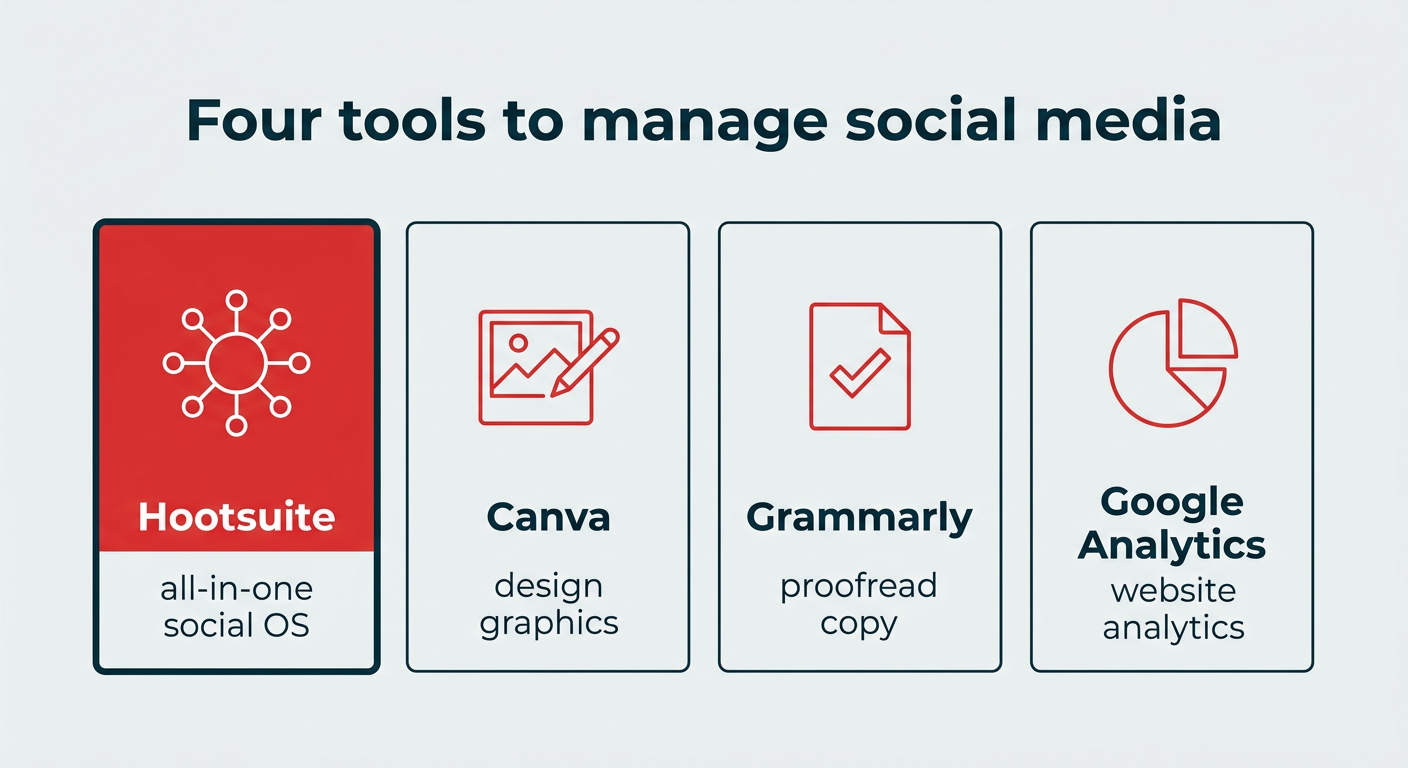
The right social media management tools can make life a whole lot easier for marketing teams. Here are four of our favorites for businesses.
1. Hootsuite
Hootsuite Social OS brings your social media workflow together across planning, publishing, engagement, analytics, listening, and AI. Four connected apps handle the day-to-day.
For content management, Perch helps teams plan, create, schedule, optimize, and measure social posts across every major network.

You can effortlessly plan and share content across various channels, including Instagram, X, LinkedIn, and YouTube. (For added convenience, Perch also integrates with tools like Canva and Adobe Express.)
Using Perch, you can easily repurpose your best-performing posts, upload branded graphics, and review optimal posting times based on your unique audience.

Nest by Hootsuite simplifies conversations and customer care on social. Teams can set up inbox automations, route conversations, track interaction history, and monitor response times, CSAT scores, engagement volume, and more.

Lumen handles listening and brand health tracking, while Wisdom turns that data into recommended next steps.
2. Canva
If you’re flying solo or have a small social team without a graphic designer, Canva is the go-to platform for crafting original and branded graphics.
Canva provides an easy way to produce branded visuals for posts, ads, and more. Its library of templates and drag-and-drop design tools makes it simple to create polished graphics in minutes.

3. Grammarly
Grammarly is an AI-powered writing assistant that checks text for grammar and spelling errors while also suggesting improvements for tone, clarity, and readability.
Even small typos can make posts look unprofessional or confuse your audience. Using a proofreading tool like Grammarly ensures your captions, replies, and campaign messaging are clear and error-free.

4. Google Analytics
Google Analytics (GA4) helps you understand what happens after someone clicks from social media to your website. It tracks where your visitors come from, which pages they view, and what actions they take once they arrive.

This makes it easier to see how social media contributes to real business outcomes like sign-ups, purchases, or lead generation. You can also identify which platforms, posts, or campaigns are driving the most valuable traffic.
FAQ: Social media for business
How do businesses use social media to drive brand awareness and revenue?
What social media platforms are best for business marketing?
What is an effective social media strategy for businesses in 2026?
How do companies measure ROI from social media marketing?
What are best practices for managing social media for a growing business?
What is the 5-5-5 rule for social media?
What is the 5-3-1 rule for social media?
Do I need an LLC for a social media business?
How often should a business post on social media?
How can small businesses compete with larger brands on social media?
Save time managing your social media marketing strategy with Hootsuite. Publish and schedule posts, find relevant conversions, measure results, and more â all from one dashboard. Try it free today.

Source: Owala